Black Spots on Your Window Sills? Fix the Condensation, Not the Stain
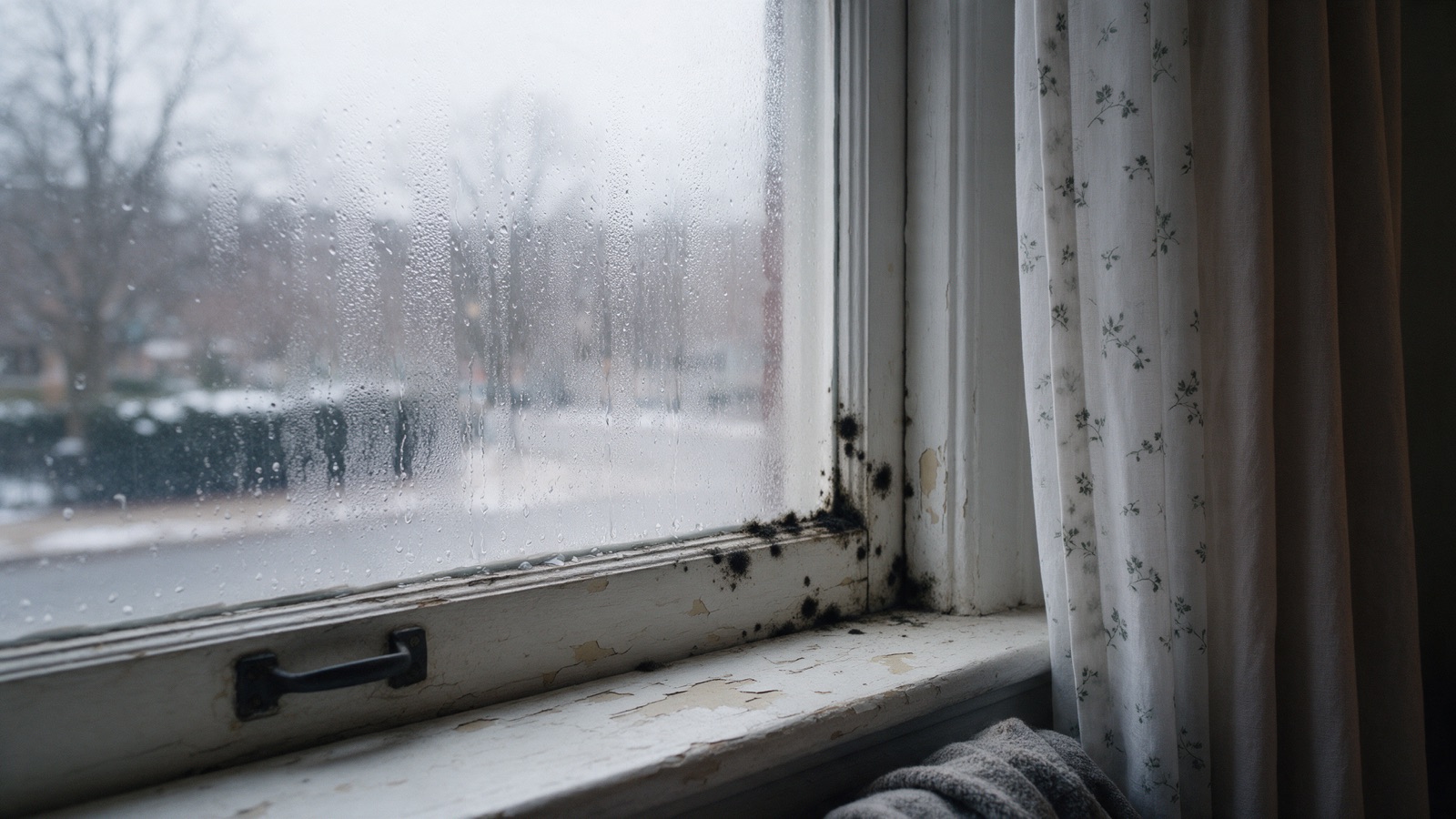
The black speckling along the bottom of your window sash is mold. We will not pretend otherwise, and we will not pretend you need us for it. It is one of the most common things we are asked about in older houses across DC, Northern Virginia, and Maryland, and almost every time it is a twenty-minute cleanup and a humidity problem. Clean it without fixing the humidity and it is back in three weeks. Fix the humidity and you may never see it again.
Why the sill goes black and the wall does not
Glass is the coldest surface in the room on a winter night. Warm indoor air holds moisture, and when it touches a surface colder than its dew point, that moisture condenses out as liquid. The window pane sweats, the water runs down the glass, and it pools in the joint where the bottom rail of the sash meets the sill. That joint stays wet for hours every morning. Add a little dust and the paint film itself as food, and you have the three things mold needs: water, food, and time.
That is why the growth sits in a neat line at the bottom of the glass and in the lower corners, and why the wall eighteen inches away is fine. It is also why scrubbing alone fails. You are removing the colony while leaving the puddle it grows in.
Two numbers decide whether a window sweats: how cold the glass gets, and how much moisture is in the air. Everything that follows is a way of moving one of those two numbers. The cheap fixes move the moisture. The expensive fixes move the glass temperature.
The ten-second check before you clean anything
Press a fingernail or a flat screwdriver into the sill and the bottom rail of the sash, right where the black is. On a sound painted wood sill it will not go in. If it sinks into soft, punky wood, the sill has been wet for years, not weeks, and the mold is the least of the problems. Rot repair is a carpentry job and it is worth getting the window looked at before you spend a Saturday on the surface.
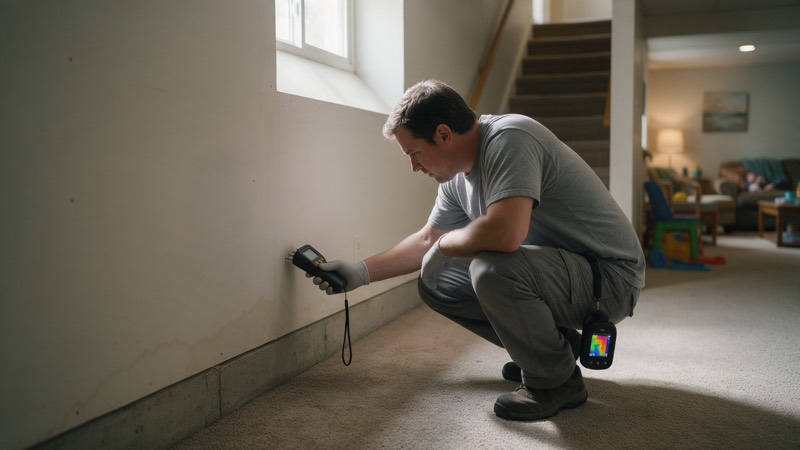
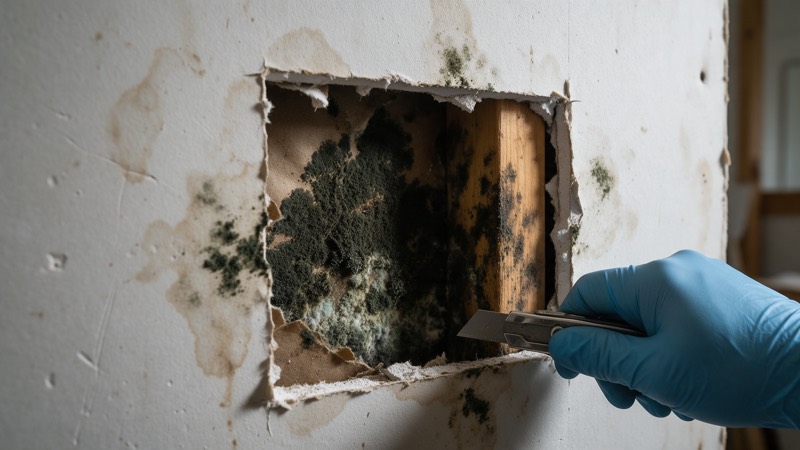
Then look below the sill. Tap the drywall or plaster under the window and look at the paint for staining, bubbling, or a tide line. Water that has been running off the sill onto the wall below can be growing inside the wall cavity, where you cannot clean it. A dry, firm wall under a black sill means a surface job. A stained or soft wall under it means stop and read the end of this article first.
Finally, add up the area. A line of spots along the bottom of three windows is still well under the ten square foot threshold where we tell people to stop doing it themselves. Black across the whole lower wall and up the window jambs is a different conversation.
Clean the spots: twenty minutes, no bleach
This is a hard, painted surface, which is the easiest kind of mold to deal with. Plain detergent and water does the work. Bleach is the wrong tool here for the reasons in our bleach article: it is mostly water, it soaks into paint and wood, and it leaves the surface wetter than it found it.
- Put on a mask, gloves, and gogglesAn N95 and nitrile gloves. The spores you disturb by wiping are the exposure, so do this before you touch anything, not after you notice the smell.
- Mist firstSpray the spots with a squirt of dish detergent in a bottle of warm water until they are damp. Never dry-brush a colony. Wetting it keeps spores on the cloth instead of in the air.
- Wipe toward the corner, not across the roomUse a microfiber cloth and work from the clean area into the black, so you are not dragging growth across a clean sill. Fold the cloth to a fresh face often. Bag the cloth when you are done.
- Get into the jointThe line where the sash rail meets the sill is where the water lives. Run an old toothbrush or a cotton swab along it, then wipe again. If the sash tilts in or lifts out, do that and clean the bottom rail on all sides.
- Dry it completelyPaper towel, then leave the window uncovered for the day. A damp sill at bedtime is a wet sill by morning, and you have just reset the clock.
- Check the track and the weep holesOn vinyl or aluminum windows, the bottom track collects the same water. Clear the small weep slots on the exterior face of the frame with a toothpick so the track can drain outward instead of sitting full.
Do not sand a sill in a house built before 1978
Peeling paint on an old window is exactly where lead paint lives, and sanding or scraping it dry makes lead dust that is a far more serious problem than the mold. Wet-wipe only. If the paint is failing badly and you want to repaint, use lead-safe wet methods or hire someone certified for lead work. The federal Renovation, Repair and Painting rule exists for this reason.
Tonight: the four free fixes
Before you buy anything, four changes cost nothing and solve the problem outright in a lot of houses. Do all of them, not one.
- Open the blinds and curtains at night. A closed curtain traps a pocket of still, cold air against the glass, so the pane gets colder and the moisture in that pocket has nowhere to go. The window with the heavy drapes is always the worst one in the house.
- Run the bath fan for twenty minutes after every shower. One shower puts a surprising amount of water into the air of a small house, and that water looks for the coldest glass. If the fan does nothing when you hold a square of toilet paper to it, that is your first repair.
- Use the range hood and put lids on pots. A pot of pasta boiling for fifteen minutes without a lid or a hood is a humidifier. If the hood recirculates through a charcoal filter instead of venting outside, it is doing nothing for moisture.
- Turn down or unplug the humidifier. Many houses run a bedroom humidifier all winter because the air feels dry. If the windows are sweating, the air is not dry. The window is telling you the real number.
Then buy a hygrometer. It is the same ten-dollar tool we recommend for basements, and it turns the whole problem into a number you can watch. Put it on the sill of the worst window and look at it before bed.
What the number on the hygrometer means in winter
In summer, the goal is to keep the house under 60% relative humidity to stop mold on walls. In winter, the target is lower, because the glass is so much colder than the wall. The colder the night, the lower the indoor humidity has to be before the window stops sweating.
| Reading on the sill at bedtime | What it means |
|---|---|
| Under 30% | Dry enough that windows should not sweat even on a cold night. If you still see water, the glass is unusually cold, so look at the weekend fixes. |
| 30% to 40% | The winter sweet spot for most of the region. Mild nights are fine; the coldest nights may still fog single-pane glass. |
| 40% to 50% | Comfortable, but single-pane and older double-pane windows will condense on any night near freezing. The free fixes above usually get you out of this band. |
| Over 50% | Something is adding moisture: a humidifier, an unvented dryer, a damp basement or crawl space, or a lot of showers with no fan. Find the source before buying anything. |
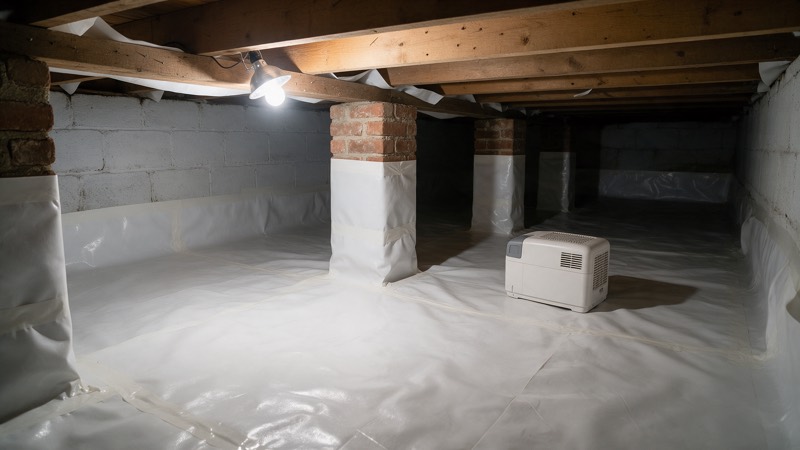
If the reading is over 50% and you have done the free fixes, the moisture is probably coming up from below. An unconditioned crawl space or a damp basement feeds the whole house through the stack effect all winter, and the top-floor windows are where it finally condenses.
This weekend: raise the glass temperature
Once the humidity is in range and the worst window still sweats, the glass is the problem. You cannot change the weather, but you can put a layer of still air between the room and the cold pane, which is all a double-pane window does anyway.
- Weatherstrip the sashCold air leaking in around a loose sash chills the glass and the sill. Self-adhesive foam or V-strip along the meeting rail and the sides of the lower sash takes fifteen minutes per window. On old wood double-hungs, a spring bronze strip lasts decades.
- Shrink film on the insideThe clear plastic kits you heat with a hair dryer are ugly and they work. The air gap keeps the room-side surface several degrees warmer, which is often the difference between sweating and not. Do the north and east windows first.
- Caulk the exteriorWalk the outside of the window and look for open joints between the frame and the brick or siding. A tube of exterior caulk closes the air path that is chilling the frame from behind.
- Check that the radiator or register under the window is not blockedBuilders put heat under windows on purpose. A sofa pushed against the radiator or a rug over the floor register means the glass is not getting the warm air wash it was designed for.
- Consider interior storm insertsCompression-fit acrylic panels that press into the window frame from inside. They are the serious version of shrink film, reusable every winter, and they do not touch the historic exterior of the house.
Older DC housing: why these windows are worse, and what not to do
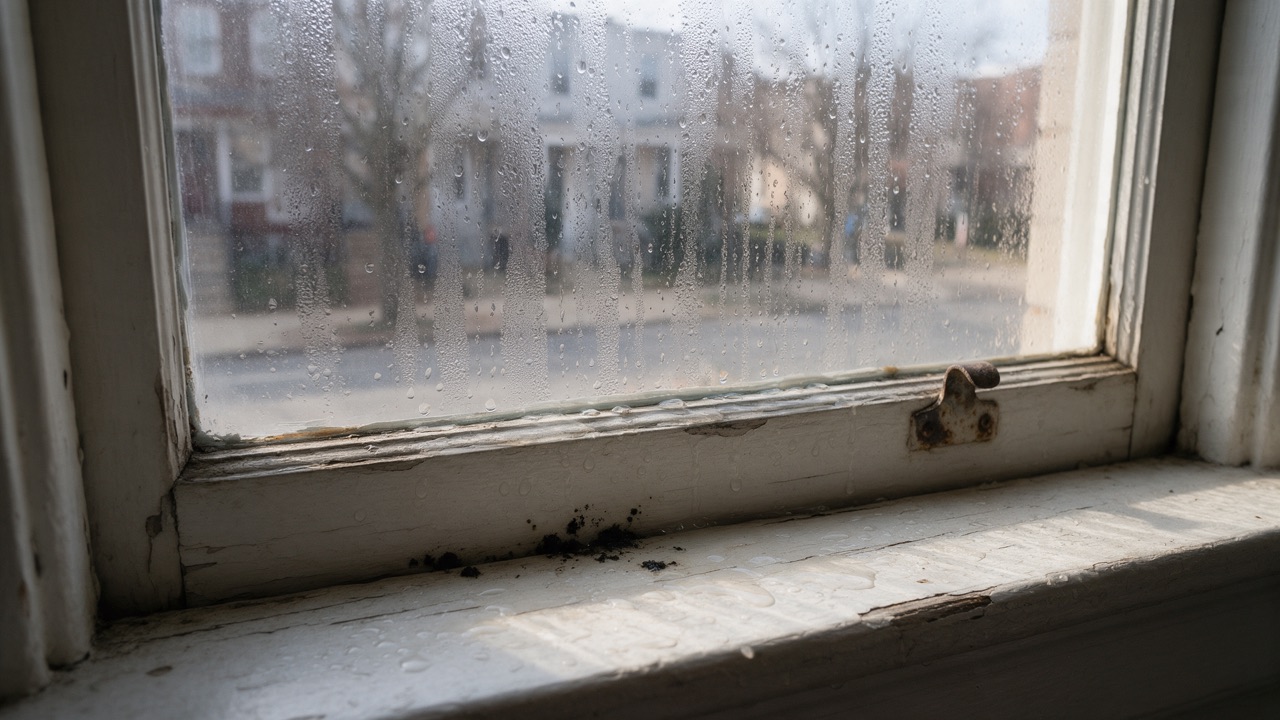
Most of what we see in the District and the close-in Maryland suburbs is a hundred-year-old wood double-hung window, single pane, often with a rope-and-weight sash that leaks air through the pulley pockets. Single-pane glass on a January night can sit near the outdoor temperature. It will sweat at humidity levels that would leave a modern window dry.
The instinct is to replace the windows. Sometimes that is right, but three things are worth knowing first. Old-growth wood sashes are repairable almost indefinitely, and a repaired sash with good weatherstripping and an interior storm performs close to a replacement for a fraction of the cost. If the house is in a historic district, the exterior appearance of the windows may be regulated, and you want to check with the historic preservation office before you sign a window contract. And a new window in a wall that is still being fed moisture from a damp basement will sweat too, just a little less.
Rowhouses have a second quirk. Heat rises through the stair hall and the moisture goes with it, so the top-floor bedroom windows and the little window at the top of the stairs are usually the worst in the house even though nobody showers up there. If that is your pattern, the fix is downstairs.
If you rent
Mold on a sill is a cleaning job for you, but a window that sweats so badly it stains the wall and rots the sill is a building problem. The DC Mold Assessment and Remediation Act sets out what a landlord has to do when a tenant reports mold in the District, and Virginia and Maryland tenants have their own landlord-tenant protections. Report it in writing, photograph it with a date, and keep the hygrometer reading in the photo.
What it costs: doing it yourself versus hiring it out
This is one of the cheapest problems in the house to solve yourself and one of the easiest to overspend on. Everything on the left side of this list is a hardware store trip.
| Situation or item | Doing it yourself | Hiring it out |
|---|---|---|
| Cleaning kit: N95s, nitrile gloves, goggles, detergent, microfiber, bags | $35–$55, one trip | $600–$1,500 for a contained small-area remediation, which this rarely needs |
| Hygrometer | $10–$12 each | Visual inspection with moisture mapping is free; air sampling runs $350–$600 if you want numbers in writing |
| Weatherstripping, per window | $8–$15 for foam or V-strip; $25–$40 for spring bronze | $75–$150 per window from a handyman |
| Shrink-film kit | $15–$25 for a multi-window kit | Not something anyone hires out |
| Exterior caulk | $8–$12 per tube, plus a $10 gun | $150–$400 for a window-sealing visit |
| Interior storm insert, per window | $100–$250 measured and ordered yourself | $250–$500 per window installed |
| Portable dehumidifier, if the whole house is over 50% | $200–$350 for a 50-pint unit | $1,200–$2,800 for an installed crawl space unit |
| Window replacement, per window | Not a DIY job for most people | $500–$1,500 per opening, more for historic wood replicas |
| Mold inside the wall below the window | Not a DIY job | $1,500–$4,000 for a single room with drywall removal |
Most houses are done at the top three rows. The bottom two are where this ends up if the first winter is ignored. Typical range for this market — not a quote. Every property is different, and the number that matters is the written scope you get after the free inspection.
Where you stop
This is a surface job right up until it is not. Stop and get an inspection if any of these is true.
- The sill or sash is soft under a screwdriver. That is rot, and the mold is growing in it, not on it.
- The wall below the window is stained, bubbling, or soft. Water has been running into the cavity, and you cannot clean what you cannot see.
- Every window in the house is doing it and there is a musty smell that is worse in the morning. That is a whole-house moisture source, usually below grade.
- Spots come back within days of cleaning even with the humidity under 40%. Something is wrong with the window itself.
- The total affected area is over roughly ten square feet, or the growth is on plaster, drywall, or bare wood rather than paint.
- Anyone in the house is immunocompromised, has a respiratory condition, is pregnant, or is an infant. Have someone else do the cleaning, or have us do it.
When to stop and call
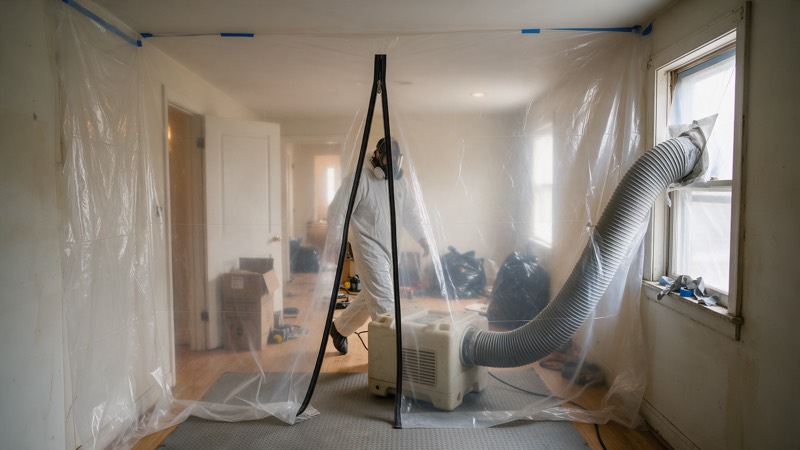
If the wall under the sill is soft or stained, or the growth has spread past the window into the wall or ceiling, stop cleaning. Photograph it before you touch anything else. A visual inspection with moisture mapping is free and tells you whether this is a sill or a wall cavity. Call 202-798-7663 or book online; the written scope is the number that matters, not anything in this article.
The spring follow-up
Once the heating season ends, do two things. Repaint the sill and the bottom rail with a good primer and a mold-resistant topcoat. Paint is what the colony eats, and a sound, glossy film with no cracks gives it less to work with and makes next winter's wipe-down a thirty-second job.
Then leave the hygrometer on the sill through next October and look at it the first cold week. If it reads under 40% and the glass is dry, you are done. If not, you know which column of the cost list to start on, and you have a whole winter of evidence that it was never the stain. It was the water.
Not sure which side of the line you are on?
The inspection is free and we will tell you honestly if it is a job you can do yourself.