Home › Washington, DC
Serving DC
Licensed, DOEE-standard mold assessment and remediation across all eight wards — same-day inspections, insurance billed directly, and the leak fixed so it does not come back.
Free inspection in DC
Most requests get a call back within the hour.
Why DC specifically
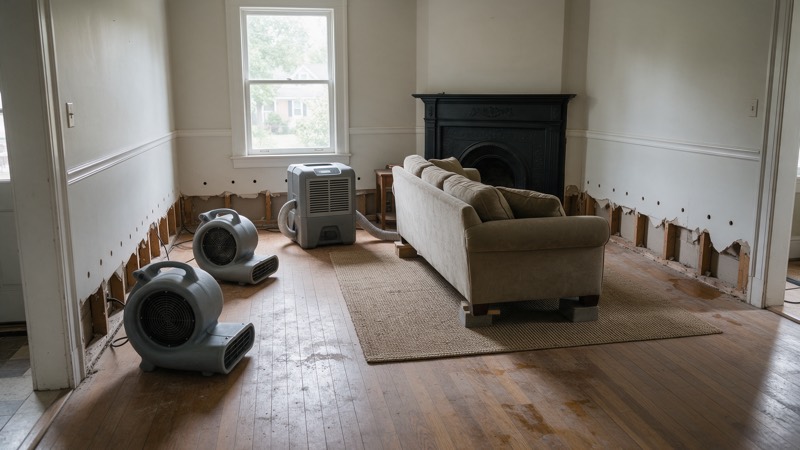
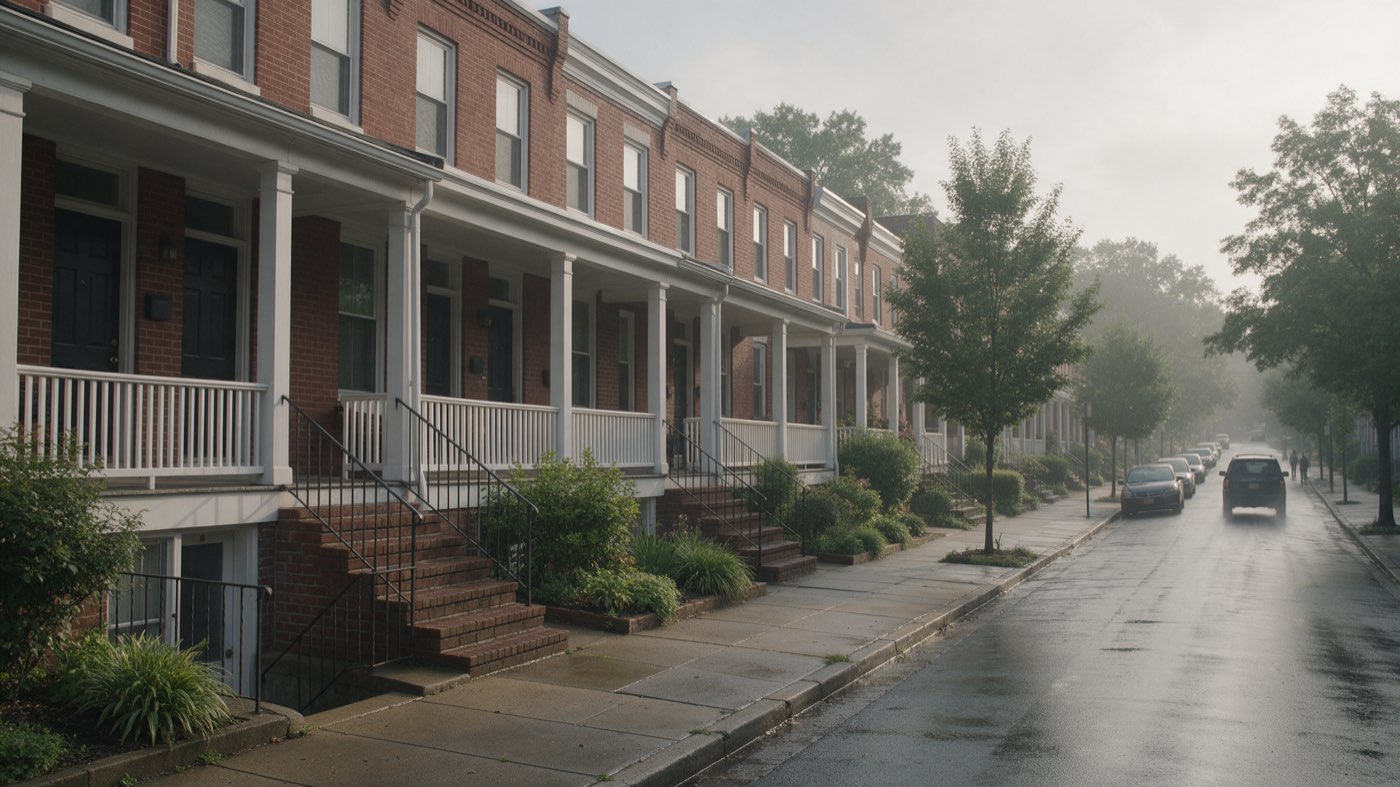
Washington's housing stock is what makes this a District-specific problem. Rowhouses built between 1900 and 1940 sit tight against their neighbors with shared party walls, below-grade kitchens and rentals, and original brick that wicks groundwater straight through the foundation. Add a flat or low-slope roof with a single failed seam, a cellar apartment two feet below grade, and a summer that runs at 70% humidity, and you get the pattern we see most: growth behind the drywall of a finished basement that nobody notices until the smell reaches the first floor.
Regulation & your rights
The District regulates this work directly. Under the Mold Assessment and Remediation Act, mold remediation covering more than ten square feet in a residential or commercial property must be performed by a professional licensed by the Department of Energy and Environment, and the law separates assessment from remediation — the company that clears the work should not be the company that performed it. Tenants also have real leverage here: DC's housing code treats mold as a habitability defect, and a landlord who receives written notice has a statutory window to assess and remediate. We work to that standard on every job and hand you the documentation to prove it, whether you are the owner, the tenant, or the property manager caught in between.
Not listed? We cover the rest of Washington, DC too — call and we will tell you honestly whether we can get there today.
Do you have a mold problem?
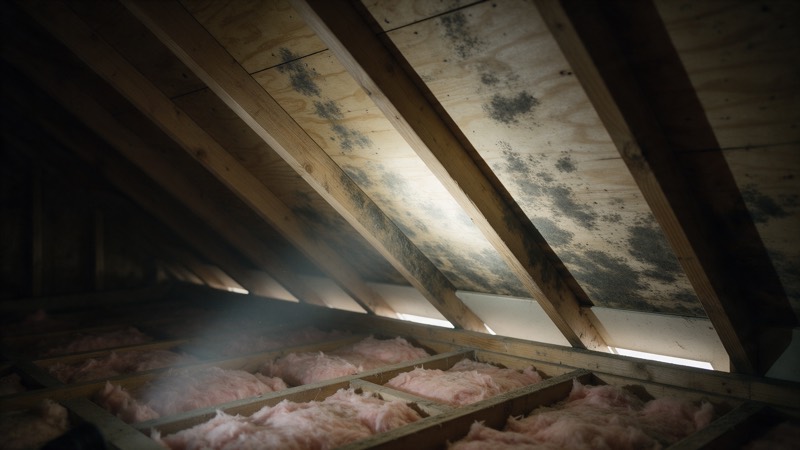
Most mold in this region is never seen — it is smelled, or it shows up as a stain, a warped baseboard, or a cough that stops on vacation. Check everything that applies and you will get a straight read on whether this needs a professional today.
We bill your insurance
Most mold jobs in DC, Virginia, and Maryland start as a covered water loss — and most homeowners find that out only after they have already paid someone in cash. We handle the claim side end to end.
Many policies cap mold at $5,000–$10,000. We tell you where your claim is likely to land before the work starts.
How the work runs
No hand-offs, no second contractor to hire for the rebuild, and no testing done by the same people who did the removal.
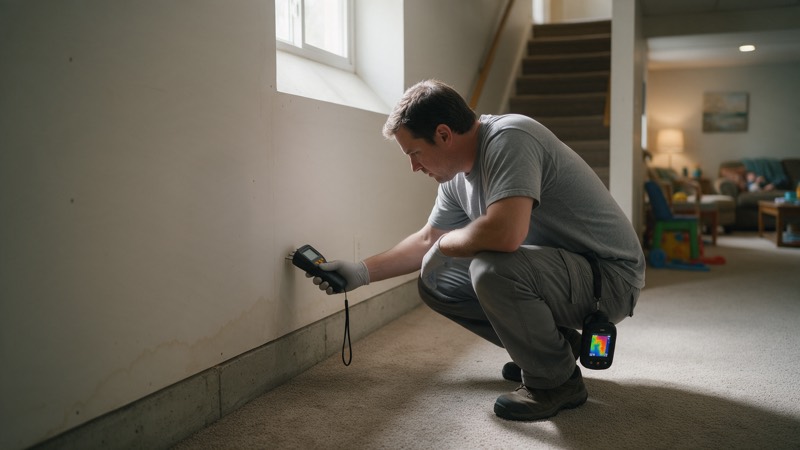
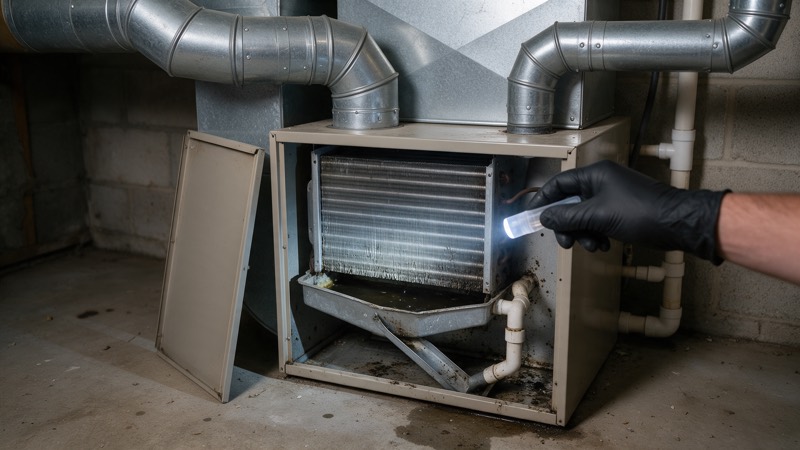
A licensed technician walks the property with moisture meters and a thermal camera, finds the water source, maps the affected square footage, and photographs everything your insurer will ask about.
You get a written scope and line-item estimate the same day, built in the estimating format carriers expect — plus the photo log and moisture readings that support the claim.
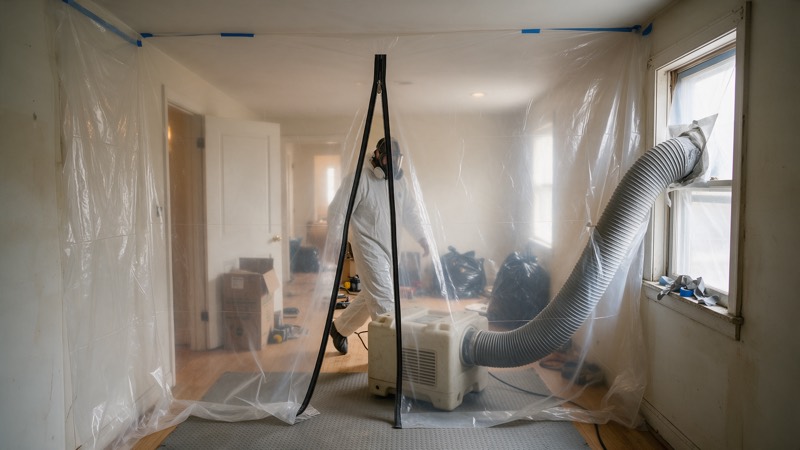
The work area is sealed in 6-mil poly with a negative-air machine and HEPA filtration so spores are not pushed into the rest of the house while we work.
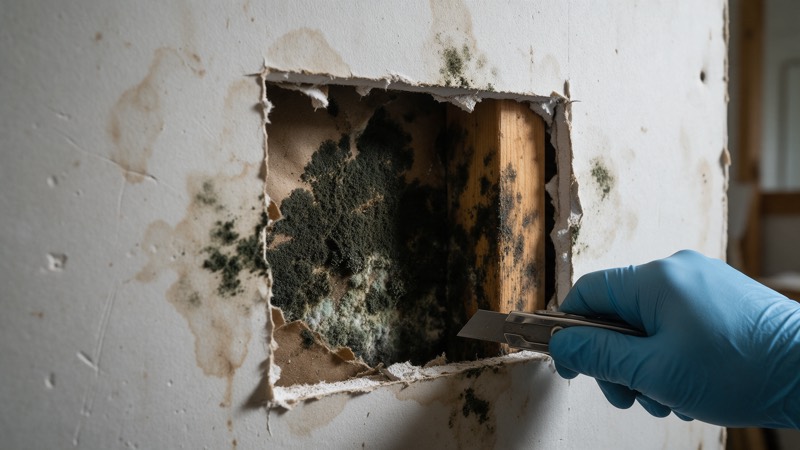
Non-salvageable porous material is cut out and bagged, framing and salvageable assemblies are HEPA-vacuumed and treated with an EPA-registered antimicrobial, then the space is dried to a documented moisture target.
An independent hygienist samples the area and issues a clearance report. We do not test our own work — the document is yours, and it is what a buyer, a lender, or a tenant will accept.
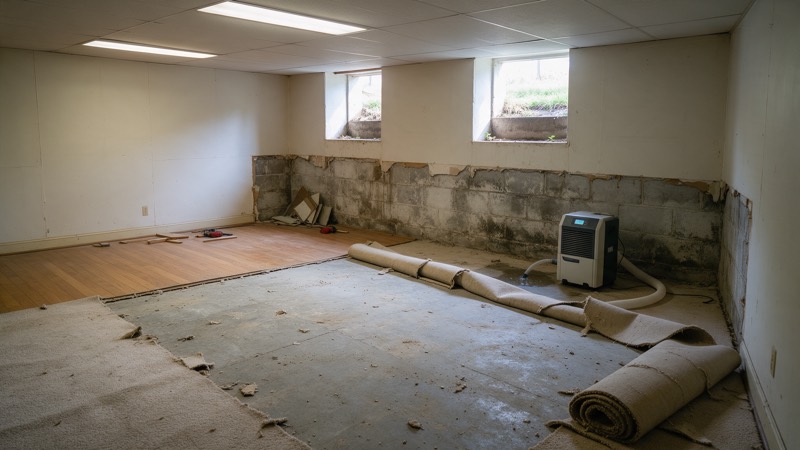
Remediation without repair guarantees a callback. We correct the roof, siding, window, flashing, or grading failure that let water in — then put the drywall, paint, and flooring back.
The part most companies skip
A remediation crew can bag every square foot of contaminated drywall in your basement and still leave you with mold again next spring, because the thing that wet the drywall is still there — a lifted shingle, a cracked step flashing, a window head with no pan, a downspout dumping against the foundation, a grade that slopes back toward the house.
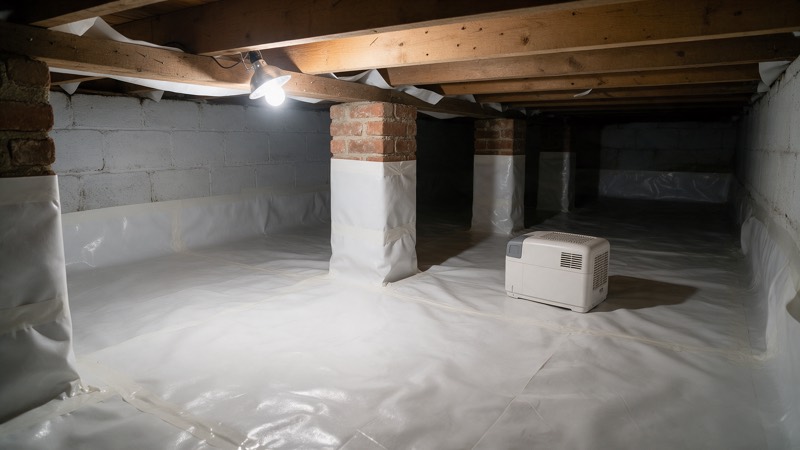
We are a licensed general contractor that has been building and repairing across the DMV since 2012. So when the inspection finds the source, we fix it: the roof, the siding, the flashing, the gutters, the grading, the crawl space encapsulation. Then we rebuild the wall we opened. One contract, one claim, one company standing behind both halves.
Get the source found — freeStraight answers
Usually yes when the mold results from a covered water event — a burst pipe, a failed water heater, a storm-driven roof leak, or a plumbing failure that was "sudden and accidental." Most policies exclude mold from long-term seepage or deferred maintenance, and many carry a mold sublimit (often $5,000–$10,000). The deciding factor is almost always documentation: what failed, when, and what it wet. That is why we photograph and meter everything on the first visit.
Yes. We write the estimate in the format carriers use, submit it with the photo log and moisture documentation, handle the adjuster walk-through, and bill the carrier directly for the approved scope. You are responsible for your deductible and for anything the carrier denies — and we tell you which items those are likely to be before we start, not after.
Same day in most of the DC, Northern Virginia, and Maryland suburbs when you call before mid-afternoon, next morning otherwise. If there is active water, call rather than fill out the form — the first 24 to 48 hours are when a water loss becomes a mold loss.
A contained closet or a small bathroom wall typically runs $1,500–$3,500. A finished basement after a sewage backup or a long-running foundation leak more often lands between $6,000 and $20,000 depending on square footage, whether the framing is salvageable, and how much reconstruction follows. Inspections are free; you get a firm written number before any work starts.
EPA guidance says a homeowner can handle roughly ten square feet or less of surface growth on a hard, non-porous surface — and the District writes that same ten-square-foot threshold into law. Beyond that, or anywhere it is growing on or behind drywall, you need containment and negative air, because scrubbing it disperses spores through the rest of the house.
Usually not. Containment and negative air are designed to keep the rest of the home habitable. We do recommend relocating during work on a primary HVAC system, on a large open-plan area, or when someone in the household is immunocompromised, pregnant, or has significant respiratory illness.
People generally mean Stachybotrys chartarum, which is dark and grows on chronically wet cellulose like drywall paper. It deserves professional handling, but so does any colonized building material — the response is the same regardless of species, which is why we do not push expensive up-front species testing. Find the water, remove the material, fix the source, verify with clearance.
Yes. You receive the inspection report with moisture readings, the photo log, the written scope, and the independent third-party clearance report. That package is what settles a real estate contingency, a lender condition, or a habitability complaint.
Free, written, no obligation. If it turns out you do not have a mold problem, we will tell you that and leave — it costs you nothing to find out.