Mold vs Mildew: How to Tell in 10 Seconds and Why It Changes What You Do
Most people who call us about mold have already decided what they are looking at. They say mildew, because it is on the shower caulk, or mold, because it is on the drywall behind the toilet, and they want to know whether the word means the job is small or large. The honest answer is that the word is less useful than you think. Mildew and mold are both fungi, and the distinction most homeowners use is practical rather than scientific. What matters is where the growth is sitting, how far it has gone into the material under it, and whether it comes off clean or leaves something behind.
Why the word matters less than the surface
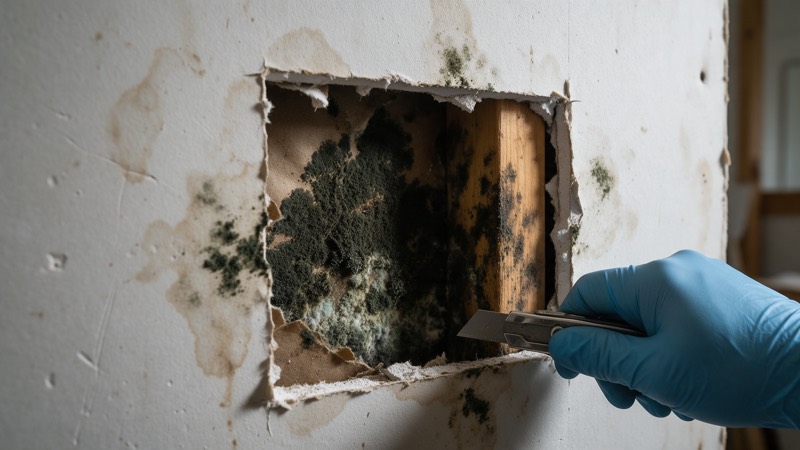
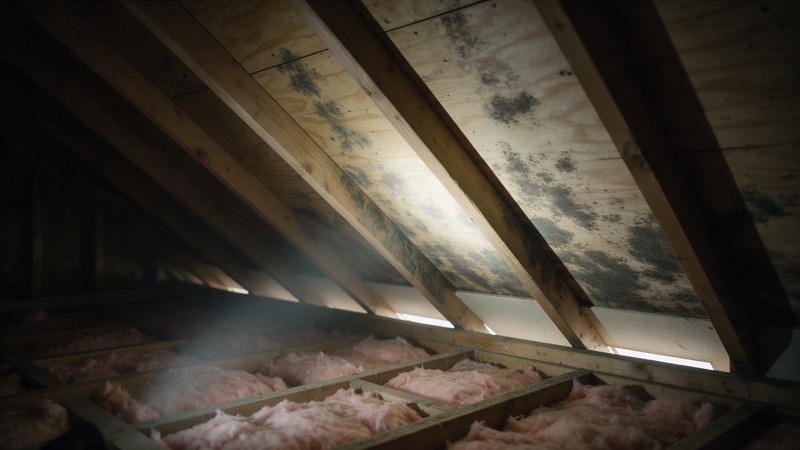
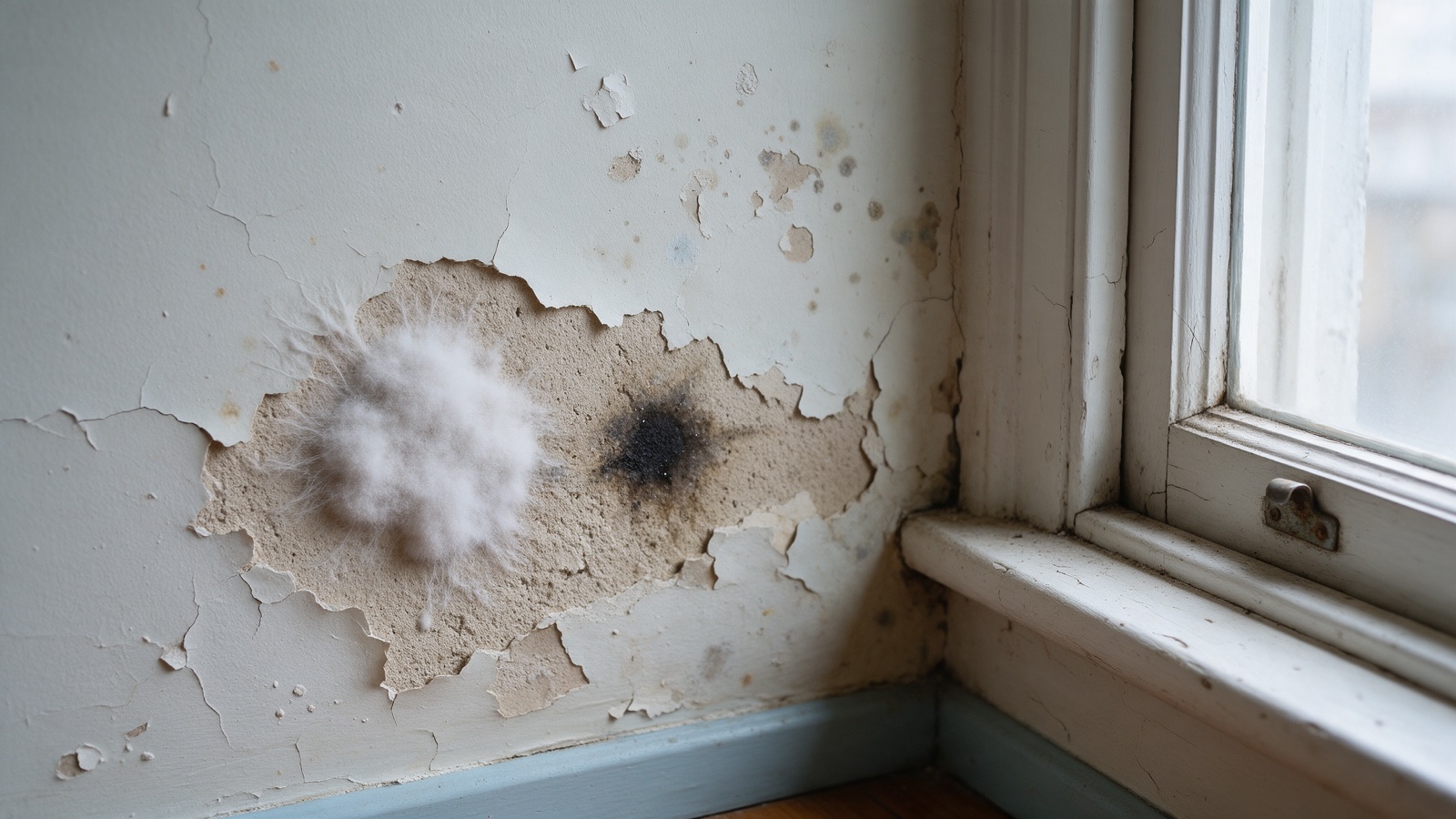
Mildew is the name people give to the flat, powdery growth that lives on the surface of paint, tile grout, caulk, and the film of soap scum on a shower wall. It is usually white, gray, or yellow-green, and it wipes away with a damp cloth. It does not put roots into the material it sits on. Mold is the name people give to the fuzzy, slimy, or deeply pigmented growth that works its way into the material: drywall paper, the back of wallpaper, carpet pad, wood, insulation, and the underside of a sill. It is often green, brown, or black, it stains the surface it sits on, and it returns when you wipe it because the root network is still there.
So the working question is not whether the word on the bottle is right. It is whether the growth lifts off the surface and leaves a clean material underneath, or whether it has become part of the material. The first is a cleaning job you can do this afternoon. The second is a removal job, and a cleaning job applied to it simply moves the problem around the room.
The ten-second look
Start with the color and the texture, then look at where it is. Those three things tell you most of what you need before you touch anything.
Flat, powdery, and evenly spread across a smooth painted or tiled surface points toward mildew. Fuzzy, raised, slimy, or in dots and clusters, especially on paper-faced drywall, carpet, or wood, points toward mold. Color is a weaker clue than people think, since both can look white, gray, green, or black depending on light and age. Location is the strongest clue: growth on a shower curtain is almost always surface fungus, while growth on the ceiling under a bathroom fan or along the bottom of an exterior wall is usually inside the building assembly.
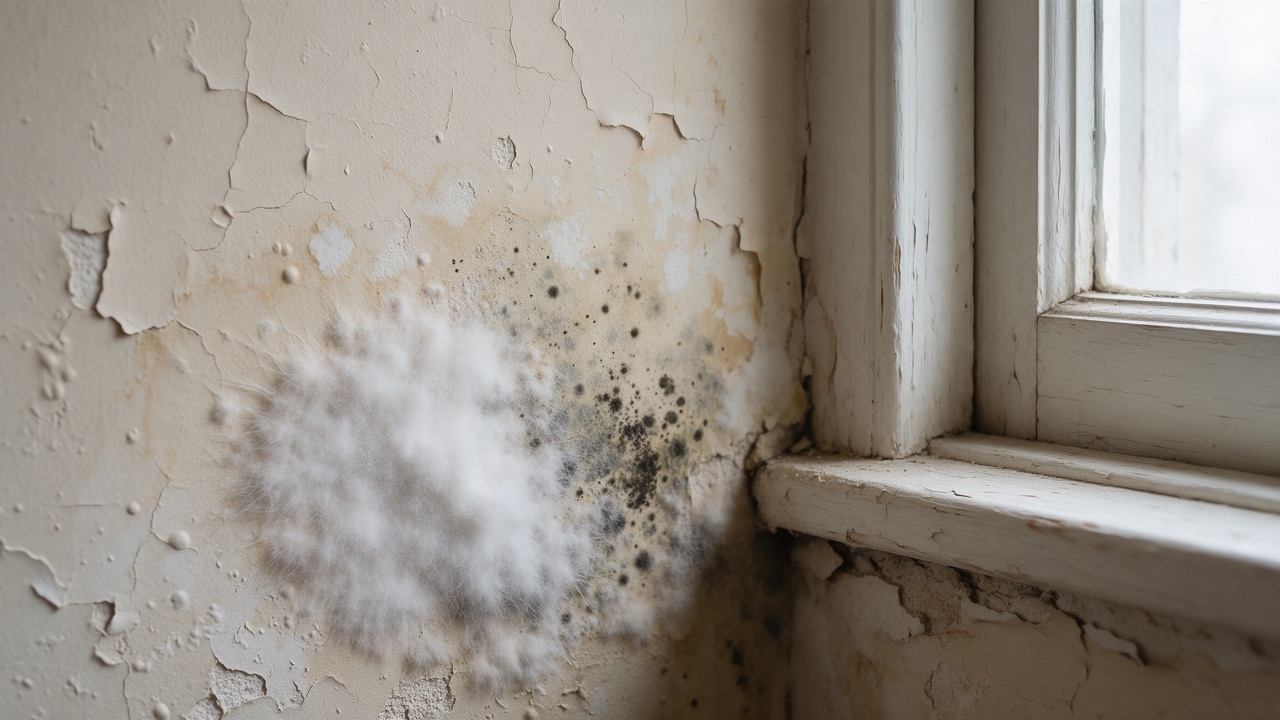
Then check the smell, with one caveat. A musty smell means there is growth somewhere, usually out of sight. It does not tell you whether the visible patch is surface or deep, so do not rely on smell alone. Use it to tell you where to look, not what the patch is.
The wipe test you can do today
This is the test that actually separates the two in most homes. It takes five minutes and a few supplies you probably already own, and it does not require you to disturb a large area. Do it on a small, inconspicuous patch first, and wear an N95 mask and nitrile gloves from the start, because the wiping is what releases spores into the air.
- Mist the spot, do not scrub itFill a spray bottle with warm water and a squirt of plain dish detergent. Mist the patch until it is damp. Dry growth releases the most spores, so wet it before you touch it.
- Wipe once, gently, with a white clothUse a clean microfiber or white cotton cloth and make one light pass. Look at the cloth. If color comes off on it, the growth is loose on the surface.
- Check what is underneathLook at the surface after the spot is gone. If the paint, grout, or caulk underneath is clean and the same color it was before the growth arrived, you have surface mildew. If the surface is stained, discolored, or the patch lifts a layer of paper or texture, you have mold that has entered the material.
- Wait three daysDry the area completely with a dry towel and leave the window or fan running. Come back and look. Surface mildew stays gone once the moisture is fixed. Mold on the same spot usually shows a faint outline, a shadow, or a returning spot within days, because the roots were still there.
If you have passed the wipe test, the surface is clean and the material is sound, you have a cleaning job. If it failed, you have a removal question, and the rest of this article is about where that question becomes a professional one.
Why cleaning mold like mildew makes it worse
The reason this distinction matters is that the two respond to the same cleaning in opposite ways. Surface mildew comes off with a damp cloth and a mild detergent. Mold that has entered porous material does not come off that way. Wiping it removes the visible part, leaves the roots in the drywall paper or the wood grain, and drives spores into the air where they settle on other surfaces. Bleach on the same spot is no better, since it is mostly water and soaks into porous material instead of reaching the growth inside it. We covered why in our bleach article.
The mistake we see most often is a homeowner who cleans a patch on drywall, sees it look better for a week, and then sees it come back darker. The cleaning did not fail. The patch was never a surface problem, so cleaning could not solve it.
What to do with surface mildew
If the test points to surface growth, the fix is quick and inexpensive. The work is in the sequence, not the chemistry: stop the moisture, clean the surface, and dry it fully before the house goes back to its normal humidity.
- Fix the moisture first. Run the bath fan for twenty minutes after every shower, open the window during cooking, and check the reading on a hygrometer. Mildew returns on any surface that stays above roughly 60 percent relative humidity.
- Clean with detergent and water. Use the same mist-and-wipe method, working from the clean area into the spot so you are not dragging growth across the surface. Replace the cloth often.
- Re-caulk the joints. Old caulk at the tub edge and around the sink holds water against the substrate. Pull the old bead, dry the joint for a day, and run a fresh bead of mold-resistant caulk.
- Dry it completely. A damp surface at bedtime is a wet surface by morning. Use a fan on the area until it is dry to the touch.
For a bathroom with a stubborn ceiling spot, the fan itself is often the cause. We wrote about that in our bathroom ceiling article, including the simple test that tells you whether the fan is actually moving air.
What to do with mold that has entered the material
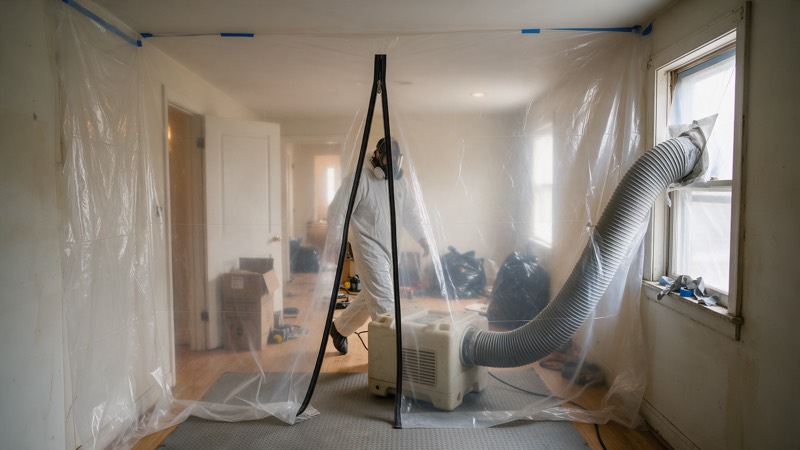
If the test failed, the first decision is containment, not cleaning. Keep people and pets out of the room, close the door, and turn off any HVAC that serves the space so the return vent does not spread spores through the house. Photograph the area before anything changes, with a date on the picture, because you will want that record for a landlord, insurer, or buyer later.
For a small contained area, under about ten square feet, of drywall, a ceiling tile, or a baseboard, a careful homeowner can remove and replace the affected material. Cut the drywall out in a single piece, bag it, and wrap the opening. Treat the framing behind it with a HEPA vacuum and let it dry fully before you close it up. Replace the drywall, tape, mud, and paint. This is a weekend job for someone who has done drywall work before, and it is not a job for anyone who has not.
Do not use a regular shop vac on mold
A household vacuum without a HEPA filter pushes fine spores back into the air through the exhaust. If you are going to vacuum a contaminated surface, the vacuum needs a true HEPA filter, and the bag or canister should be emptied outside. A regular shop vac is the wrong tool for this.
What it costs: doing it yourself versus hiring it out
The costs below are typical ranges for the Mid-Atlantic market, based on our published service pricing. Retail items are typical store prices and vary by brand and location. The professional figures are not a quote, and every house is different.
| Situation or item | Doing it yourself | Hiring it out |
|---|---|---|
| Surface mildew cleaning kit: N95s, gloves, goggles, detergent, microfiber, bags | $25–$45, one trip to the store | Visual inspection with moisture mapping is free |
| Caulk replacement at a tub or sink, one run | $10–$20 for a tube and a caulk gun | Usually a small handyman visit, quoted per scope |
| Hygrometer to track humidity | $10–$15 | Included in a free visual inspection |
| Contained mold removal, under ten square feet, drywall replaced | $60–$120 for a tool kit, bags, a drywall patch, and mud | $600–$1,500 for a contained area under ten square feet |
| Air sampling, three samples plus an outdoor control | Retail test kits are not a substitute for an accredited lab | $350–$600, results in two to three days |
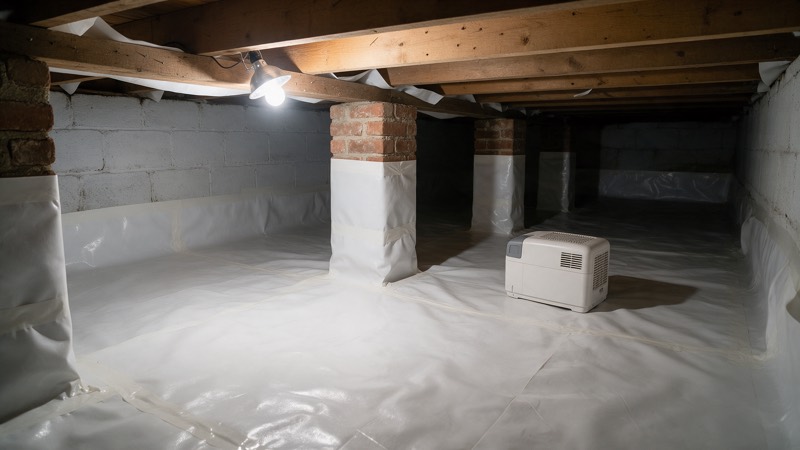
| Dehumidifier for a basement or crawl space holding humidity under 60 percent | $200–$350 for a 50-pint unit | $1,200–$2,800 for an installed crawl space unit |
| Mold-resistant primer, one gallon, for a repainted surface | $30–$50 retail | Quoted per scope |
Most homes that have surface mildew need only the first two rows. Mold inside a wall or ceiling moves the cost to the bottom rows, and that is where a professional earns the money. Typical range for this market — not a quote. Every property is different, and the number that matters is the written scope you get after the free inspection.
Where you stop and call
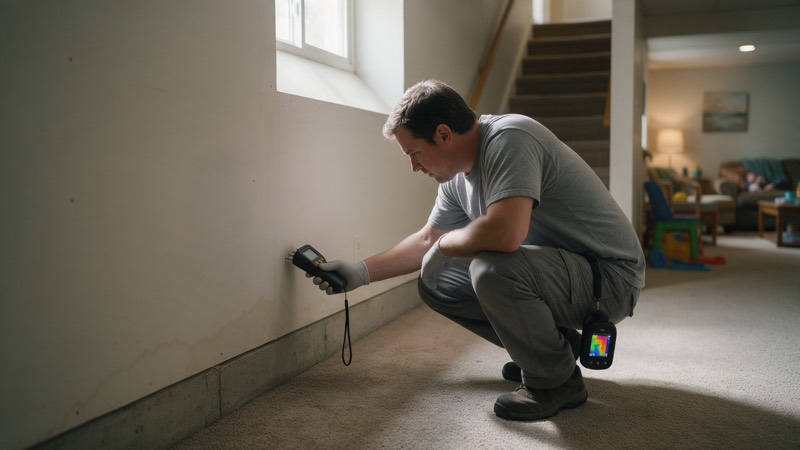
Surface mildew is a job for a weekend. Mold in the material is a job with a boundary, and the boundary is what you need to recognize. Stop cleaning and get an inspection if any of these is true.
- The affected area is larger than about ten square feet, or it covers more than one room.
- The growth is on drywall, plaster, insulation, carpet pad, or wood, and it does not wipe clean.
- The patch returns within a few days of a careful cleaning, even with the humidity under 50 percent.
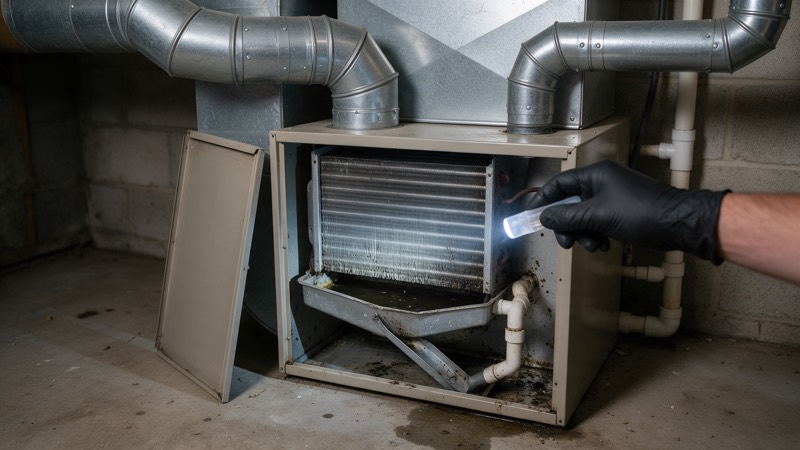
- The mold is on or near the HVAC system, the air handler, or the ductwork.
- Water has been running into a wall or ceiling cavity, which you cannot see or clean from the surface.
- Anyone in the household is immunocompromised, pregnant, an infant, or has asthma or significant respiratory disease. Have someone else handle the cleaning, or have a professional do it.
When to stop and call
If the growth is on drywall, the surface does not wipe clean, or the patch has spread beyond about ten square feet, stop. Do not run fans through the area and do not spray chemicals at it. Photograph it first. A visual inspection with moisture mapping is free and will tell you whether this is a surface problem or a material problem. Call 202-798-7663 or book online, and get the written scope before you agree to any work.
The rules of thumb in the DMV
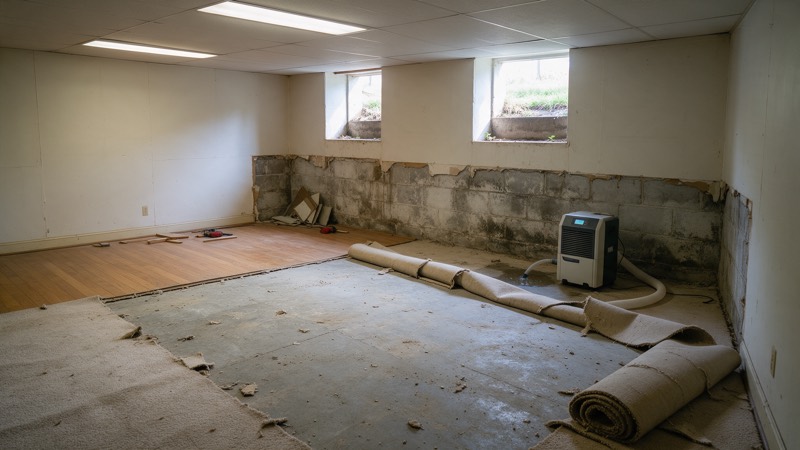
In the District, Northern Virginia, and Maryland, the humidity profile of most homes makes surface mildew a common finding on bathroom ceilings, shower walls, and window sills in the cooler months, and mold in the material a common finding in finished basements and crawl spaces. The same wipe test works in all three places, but the response is shaped by who owns the building and who is responsible for the moisture source.
If you rent, the surface cleaning and the humidity habits are yours. Mold in the wall, a leaking pipe, or a failing fan usually belongs to the landlord. The District has the DC Mold Assessment and Remediation Act, which sets out what a landlord must do when mold is reported, and Virginia and Maryland have their own landlord-tenant rules. Report the problem in writing, keep the photos, and keep the date on them.
How to stop it coming back
Surface mildew comes back for one reason: the surface stays wet longer than it should. Every fix in this article is a way of shortening that wet period. The bath fan is the most important tool, and it is worth checking every spring. Hold a square of toilet paper against the fan grille while it runs. If the paper does not pull firmly against the grille, the fan is not moving enough air, and the ceiling above the shower is where the water goes.
Set a hygrometer on the wall you care about and check it weekly for a month. You are looking for a number under 50 percent in summer and under 40 percent in winter. If the house is over those numbers, the problem is usually a humidifier, a dryer venting into the house, a crawl space or basement feeding moisture upward, or a shower with no fan. Find the source before you buy anything.
Finally, repaint or reseal the surfaces you cleaned. A sound, glossy film with no cracks gives growth less to work with. Recheck the caulk around the tub every year. Those two habits turn a recurring surface problem into a one-time job.
Not sure which side of the line you are on?
The inspection is free and we will tell you honestly if it is a job you can do yourself.