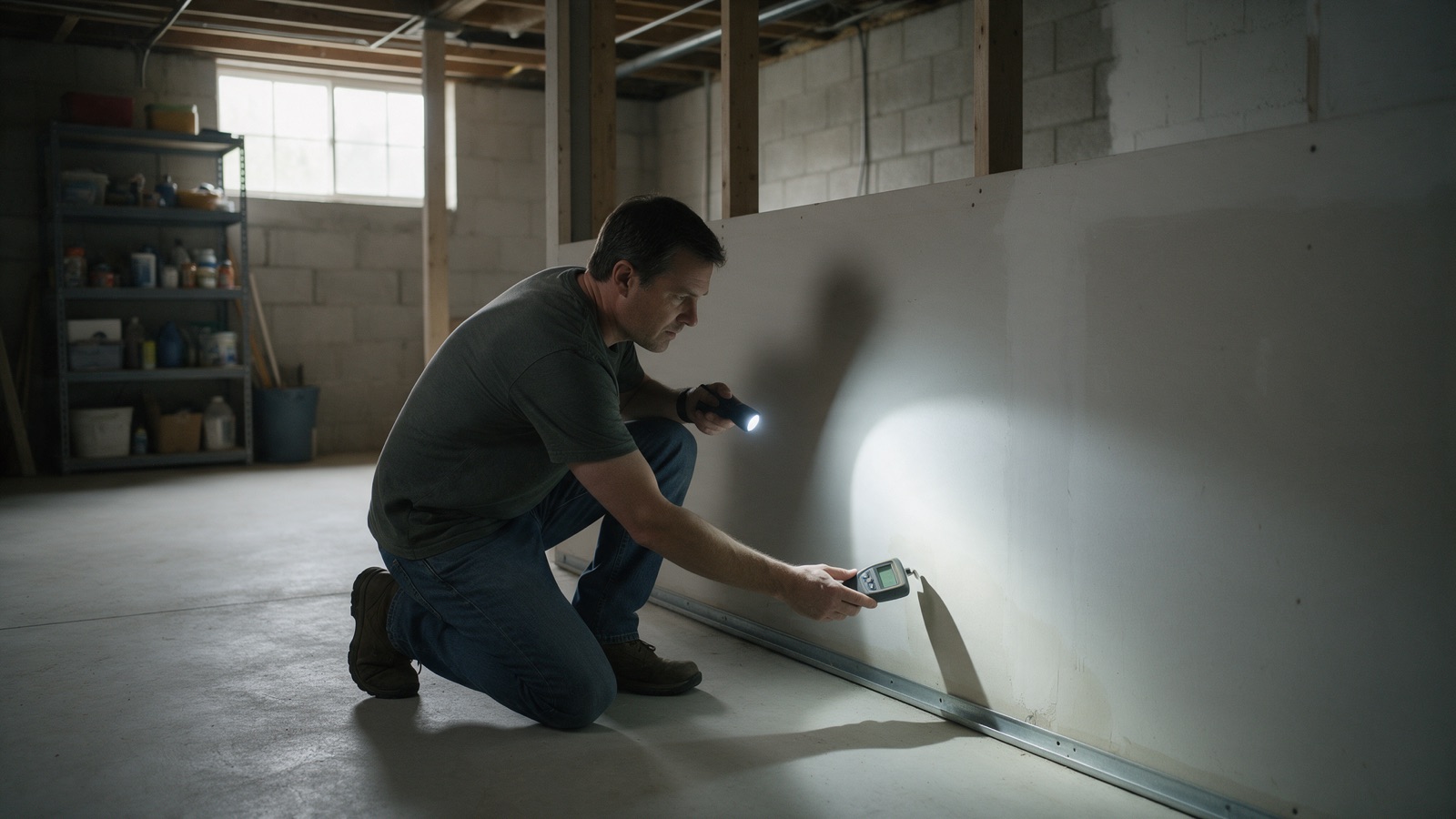
Musty Smell But Nothing Visible: How to Track It Down Yourself
A musty smell does not always mean a mold problem. Sometimes it is a dry trap in a floor drain, a forgotten wet towel, or a washing machine door that stays shut. We will say that up front because it is true, and because the search below will usually tell you which one you have before you spend anything on testing. What a persistent musty smell almost always does mean is moisture somewhere it should not be, and finding that moisture is a job most homeowners can do themselves.
What the smell actually is
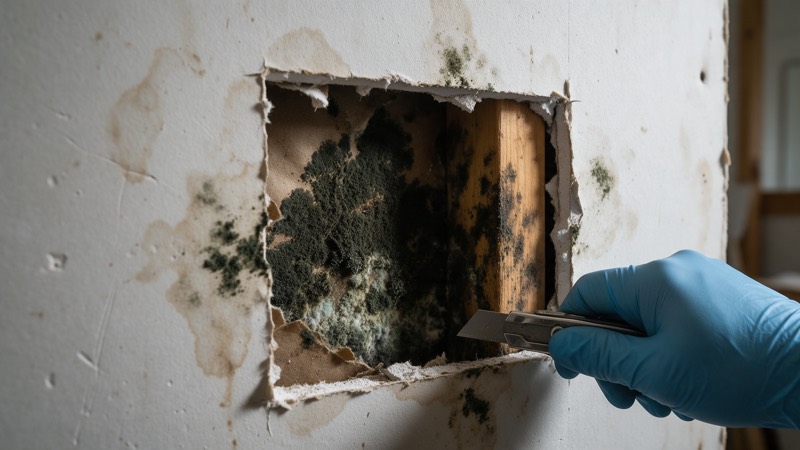
The musty, earthy odor people describe is produced by microbial growth as it digests whatever it is living on: the paper face of drywall, the dust in a carpet pad, the wood of a floor joist. Those odor compounds travel through air, through gaps around outlets and baseboards, and through the HVAC system. That is why you can smell something clearly in a room where nothing is visible. The growth is real, it is just on the back of a surface, under one, or in a cavity.
The useful part is that the smell behaves predictably. It is strongest near the source, stronger when the space has been closed up, and stronger when humidity is high. Those three facts are the whole basis of the search.
Rule out the easy suspects first
Before you start pulling up anything, spend ten minutes eliminating the sources that smell musty but are not hidden mold. Each of these is a common false alarm and each is a free fix.
- Dry floor drain or unused shower trap. A trap that has evaporated lets sewer gas up, and people often describe it as musty or damp rather than sewage. Pour a quart of water down every drain you rarely use, including the basement floor drain and a guest shower.
- Front-loading washer. The door gasket holds water and grows in the fold. Pull it back and look. If that is it, clean it and leave the door ajar between loads.
- Dehumidifier or window AC unit. Both hold standing water in a bucket or pan. Empty, clean, and dry them.
- Refrigerator drip pan. Behind the kick plate at the bottom. Forgotten in most houses.
- Damp storage. Cardboard boxes, old books, and fabric stored against a basement wall absorb moisture and smell on their own.
If one of these explains it, wait three or four days after the fix and smell again with fresh air in your nose. If the odor is gone, you are done. If it is reduced but not gone, keep going.
The kit for the search
You do not need professional equipment to find most sources. Two inexpensive meters and a good light cover the large majority of what we find on inspections. The figures below are ordinary retail ranges at DMV hardware stores, not recommendations for a particular model.
| Item | What it tells you | Typical cost |
|---|---|---|
| Digital hygrometer | Relative humidity room by room. The single most useful number in the search. | $10–$15 |
| Pin or pinless moisture meter | Whether a wall, floor, or baseboard is wetter than the ones around it. | $25–$50 |
| Bright LED flashlight | Raking light across a wall shows staining and bubbling paint you will miss head-on. | $15–$25 |
| Inspection mirror | Behind toilets, under sinks, and on the back of the water heater. | $8–$12 |
| N95 respirators, 5-pack | For crawl spaces, attics, and anywhere you lift a carpet corner. | $10–$15 |
| Painter's tape and a notepad | To mark and log what you find so the pattern is visible. | $5–$8 |
Whole search kit: roughly $70–$125, and every item is reusable. Typical range for this market — not a quote. Every property is different, and the number that matters is the written scope you get after the free inspection.
Build a sniff map, then follow it
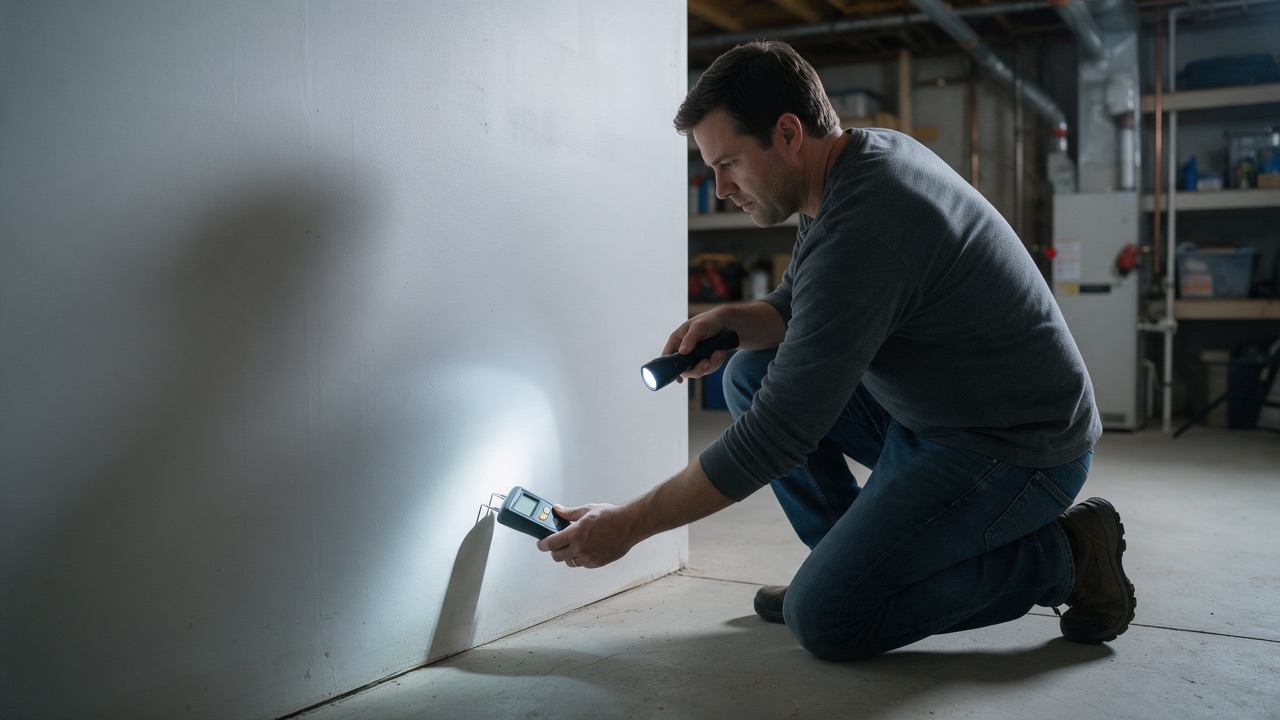
This is the part that does most of the work. Your nose adapts to a smell within minutes, so the trick is to give it fresh comparisons and write down what it tells you before it stops telling you anything.
- Close the house up overnightShut windows, close interior doors, and turn the HVAC fan to auto rather than on. You want the odor to concentrate where it originates, not get stirred evenly through every room.
- Go outside for five minutes first thing in the morningFresh air resets your nose. Then come back in and walk the house slowly, top to bottom, opening one door at a time.
- Score each room from zero to threeZero is nothing, three is strong. Write it on the notepad as you go. Do not revisit rooms on the first pass; first impressions are the accurate ones.
- Put a hygrometer in the two worst rooms for a dayAn hour on a reading is not enough. Leave it and check morning and evening. A room that holds above 60% relative humidity is a room where growth can sustain itself.
- Narrow down inside the worst roomGet close to closets, the base of exterior walls, under sinks, around the toilet, and at outlets on exterior walls. An odor that strengthens at an outlet cover is usually coming from inside the wall cavity.
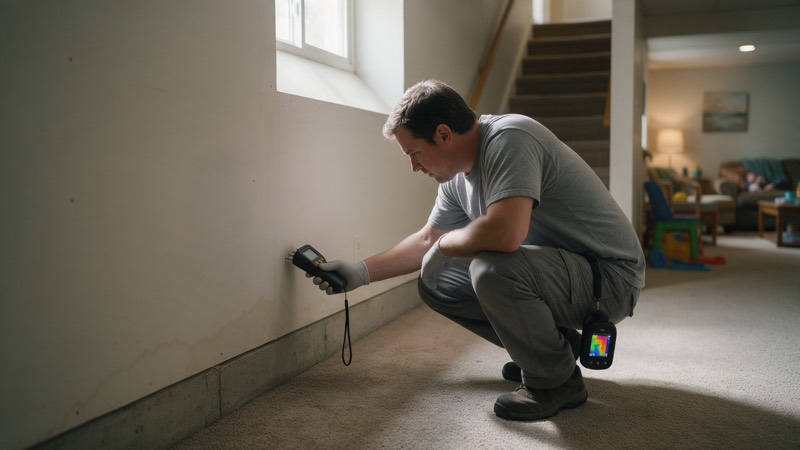
- Take moisture meter readings on a gridAlong the bottom six inches of each wall, every couple of feet, and on the floor. Mark anything noticeably higher than the readings around it with a piece of tape.
- Compare against a dry referenceTake the same reading on an interior wall in a room that does not smell. Meters vary, and the comparison matters more than the number on the screen.
Test with the HVAC on, then off
Once you have a baseline, run the system for twenty minutes and walk the house again. If the smell climbs everywhere at once rather than in one room, the source is probably in the air handler, the condensate pan, or the ductwork. That changes the search. More in our HVAC and duct mold guide.
The places it hides in Mid-Atlantic houses
In older DC rowhouses, Northern Virginia split-levels, and Maryland colonials alike, the same handful of hiding places come up over and over. Check them in roughly this order, because it is roughly the order of how often we find the source there.
Behind finished basement walls
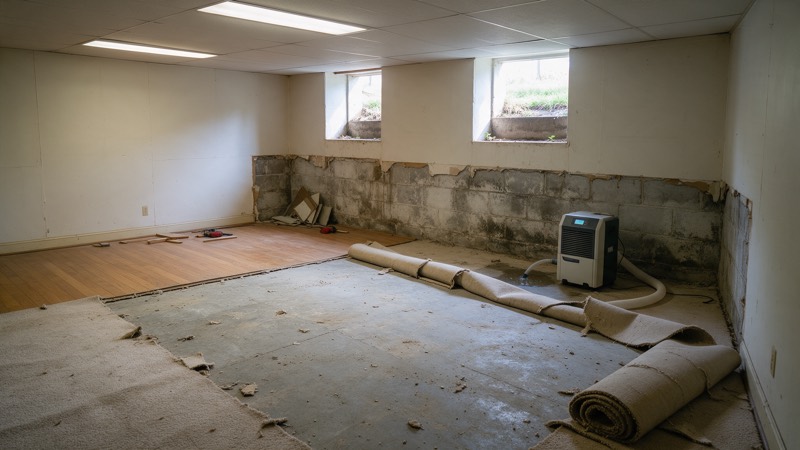
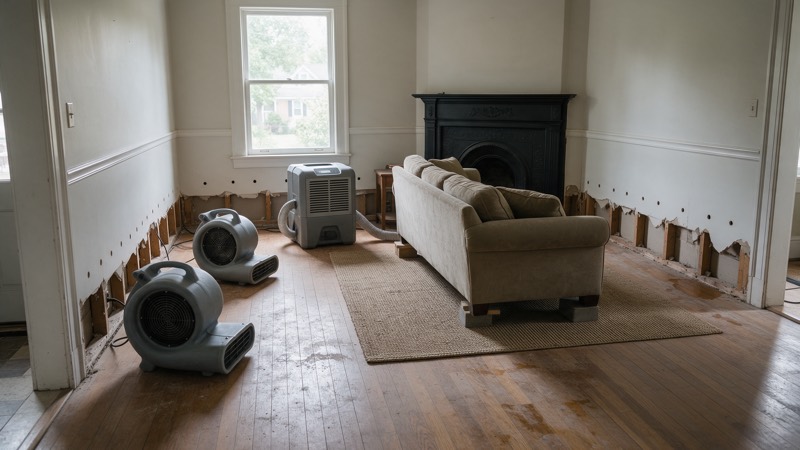
The number one source in this region. Drywall and carpet pad installed tight against below-grade block wick moisture from the masonry and grow on the back face. Readings elevated along the bottom of an exterior basement wall, especially after rain, point here. Look for a tide line, swollen baseboard, or carpet tack strip that is dark or rusty when you lift a corner. Our basement mold page covers what happens next.
Under sinks and behind toilets
A slow drip from a supply line or a weeping wax ring can run for months without pooling. Feel the cabinet floor for softness, check the back of the toilet base with the mirror, and look for a dark ring on the subfloor around the flange if you can see it from below.
Inside exterior wall cavities
Window flashing that has failed, a cracked sill, or a gap at a hose bib lets rain into the wall rather than through it. Look below windows on the side of the house that takes the weather, typically west and south facing. Paint that bubbles or a wall that reads wet only after storms is the signature.
The HVAC closet and air handler
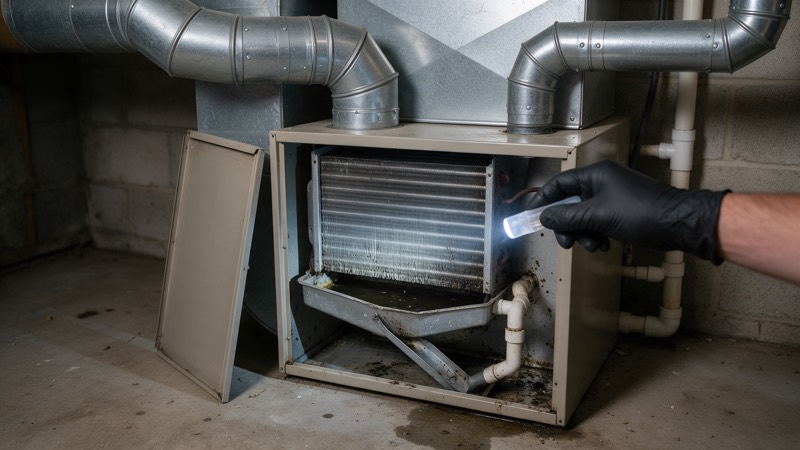
Open the air handler access panel with the system off and look at the condensate pan and the drain line. Standing water in the pan or a slime-filled drain is common and is a cheap fix if caught early.
Crawl spaces and the floor above them
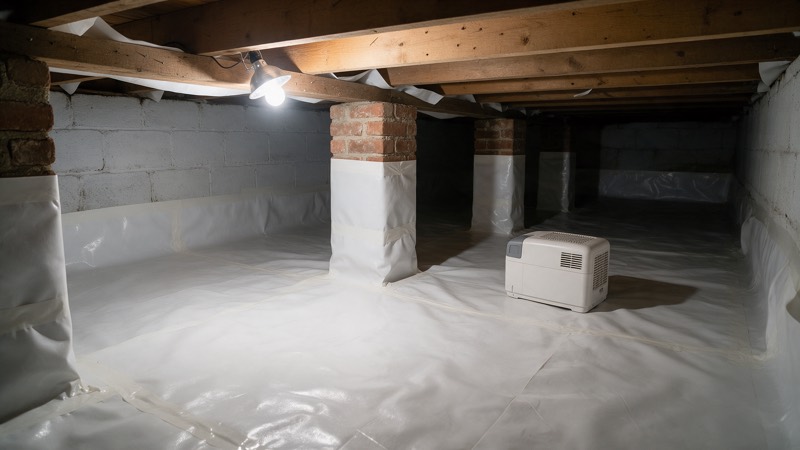
A vented dirt crawl space in a Mid-Atlantic summer pulls humid air in all season. If the smell is strongest on the first floor and in closets on exterior walls, look under the house. Bring a respirator. The crawl space guide explains why this one rarely stays fixed without changing the space.
Attics, especially over bathrooms
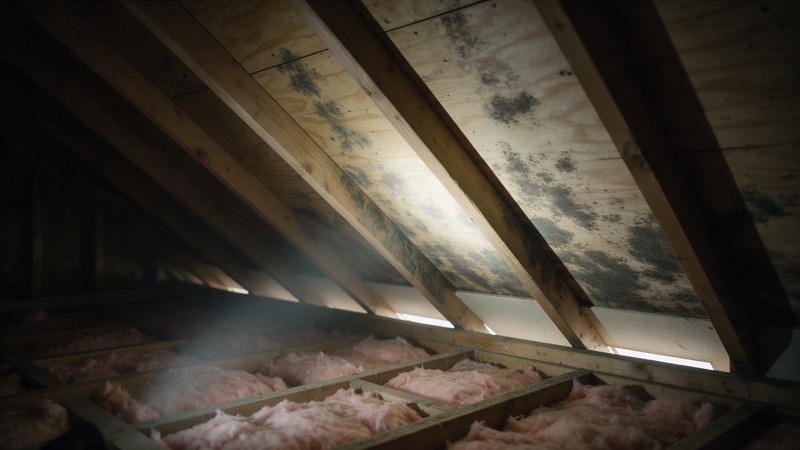
A bath fan that vents into the attic instead of through the roof dumps warm moist air onto the underside of the roof sheathing every winter. Look for frost or dark staining near the fan housing on a cold day.
Reading what you found
The point of the search is not to find mold. It is to find water. Once you know where the moisture is, you know what kind of problem you have.
| What the search showed | What it usually means |
|---|---|
| Odor fixed by a drain, gasket, or pan | Not hidden mold. Maintain it and move on. |
| High humidity everywhere, no wet spots | A humidity problem. A dehumidifier and better ventilation usually resolve it. |
| One wet spot on a wall or floor | A localized leak. Find and fix it, then decide whether the material behind it needs to come out. |
| Wet readings along the base of a basement wall | Water coming through the foundation. A drainage and grading question as much as a mold one. |
| Smell climbs when the HVAC runs | Look at the air handler and ducts before anything else. |
| Nothing found, smell persists | Time for a professional inspection with a thermal camera and sampling. |
Do not open walls on a hunch
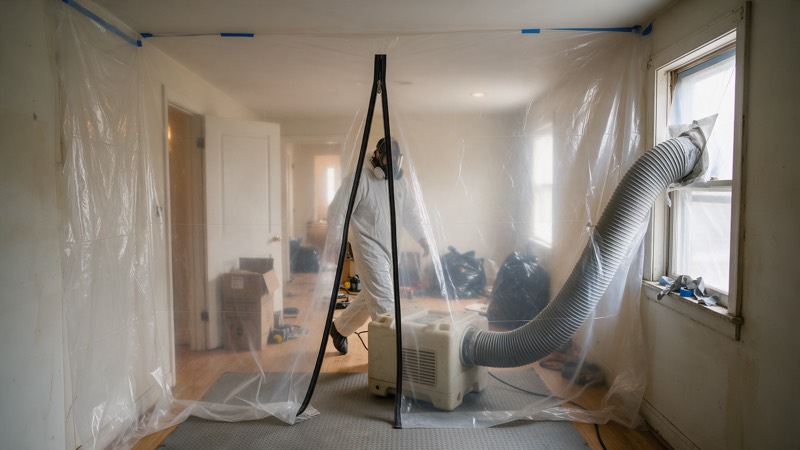
Cutting into drywall to look for growth you suspect is there is exactly how a contained problem becomes a spread one. If your readings say a wall cavity is wet and the smell is strong there, the next step is a small, controlled inspection opening by someone who can contain it, not a keyhole saw and a box fan.
What you can fix yourself today
Depending on what the search found, a lot of the remedy is still in your hands.
- Humidity. Get a dehumidifier running in the space, set to 45 to 50%, on a drain hose so it never fills and shuts off.
- Gutters and downspouts. Clean them and extend downspouts several feet away from the foundation. In clay soil this alone often stops basement seepage.
- Plumbing drips. Replace a weeping supply line or a toilet wax ring. Both are an hour of work for most homeowners.
- Condensate drain. Flush a clogged drain line with a wet/dry vac at the outdoor end.
- Bath fans. Run them twenty minutes after every shower and confirm they exhaust outdoors.
- Small surface growth on hard surfaces. Clean it per our DIY mold playbook, once the water source is fixed.
What it costs: doing it yourself versus hiring it out
The honest comparison for a smell with no visible source. Most searches end in the first two rows, and that is the outcome you want. The professional figures are the same typical ranges published on our service pages.
| Situation | Doing it yourself | Hiring it out |
|---|---|---|
| Finding the source | $70–$125 kit, an afternoon | Visual inspection with moisture mapping is free |
| Confirming mold you cannot see | Not reliable with home test kits | $350–$600 for air sampling |
| Room-wide humidity problem | $200–$350 for a 50-pint dehumidifier | $1,200–$2,800 for an installed crawl space unit |
| Clogged condensate drain or pan | $0–$20 and a wet/dry vac | $250–$900 for drain correction and pan replacement |
| Growth behind drywall in one room | Not a DIY job | $1,500–$4,000 |
| Finished basement wall seepage | Gutters and downspout extensions, $20–$100 | $4,000–$12,000 for removal and drying, before reconstruction |
The cheapest outcome is a source found and fixed before the growth spreads. Typical range for this market — not a quote. Every property is different, and the number that matters is the written scope you get after the free inspection.
One note on testing. Home mold test kits, the petri dish kind sold at hardware stores, will grow something almost every time because spores are present in every house. They cannot tell you whether you have an indoor problem. A professional air sample compares indoor levels against an outdoor control, which is what makes it meaningful. If you have done the search and still cannot find it, that is when testing is worth the money.
When to stop searching and call
The DIY search is the right first move for almost everyone. It stops being the right move when any of these are true:
- Your readings point into a wall, ceiling, or floor cavity and the smell is strong there.
- The smell climbs when the HVAC runs.
- There was a flood, sewage backup, or standing water within the last few weeks.
- Someone in the house reports symptoms that ease when they leave. That is a question for a doctor about them and a question for an inspector about the building.
- You are buying, selling, or renting and need documentation that will hold up.
- You have done the search properly and the smell is unchanged.
Stop if the search leads into a cavity or the ductwork
Do not open walls or pull duct liner yourself. Disturbing hidden growth is what spreads it. Note what you found, keep your marked tape and readings, and call 202-798-7663 or book a free inspection through our scheduling link. Your notes will make that visit shorter and more useful.
The regional footnote
Two things make this search harder here than in drier parts of the country. Summer humidity in the DMV keeps unconditioned basements and crawl spaces above 60% for months without any leak at all, so the humidity reading matters more than it would elsewhere. And much of the housing stock in DC and inner Maryland has finished below-grade space built against uninsulated masonry, which means the most common hiding place is also the hardest to see. A systematic search, a hygrometer, and a moisture meter still find the source in most houses. That is worth an afternoon before anyone spends money on anything else.
Not sure which side of the line you are on?
The inspection is free and we will tell you honestly if it is a job you can do yourself.