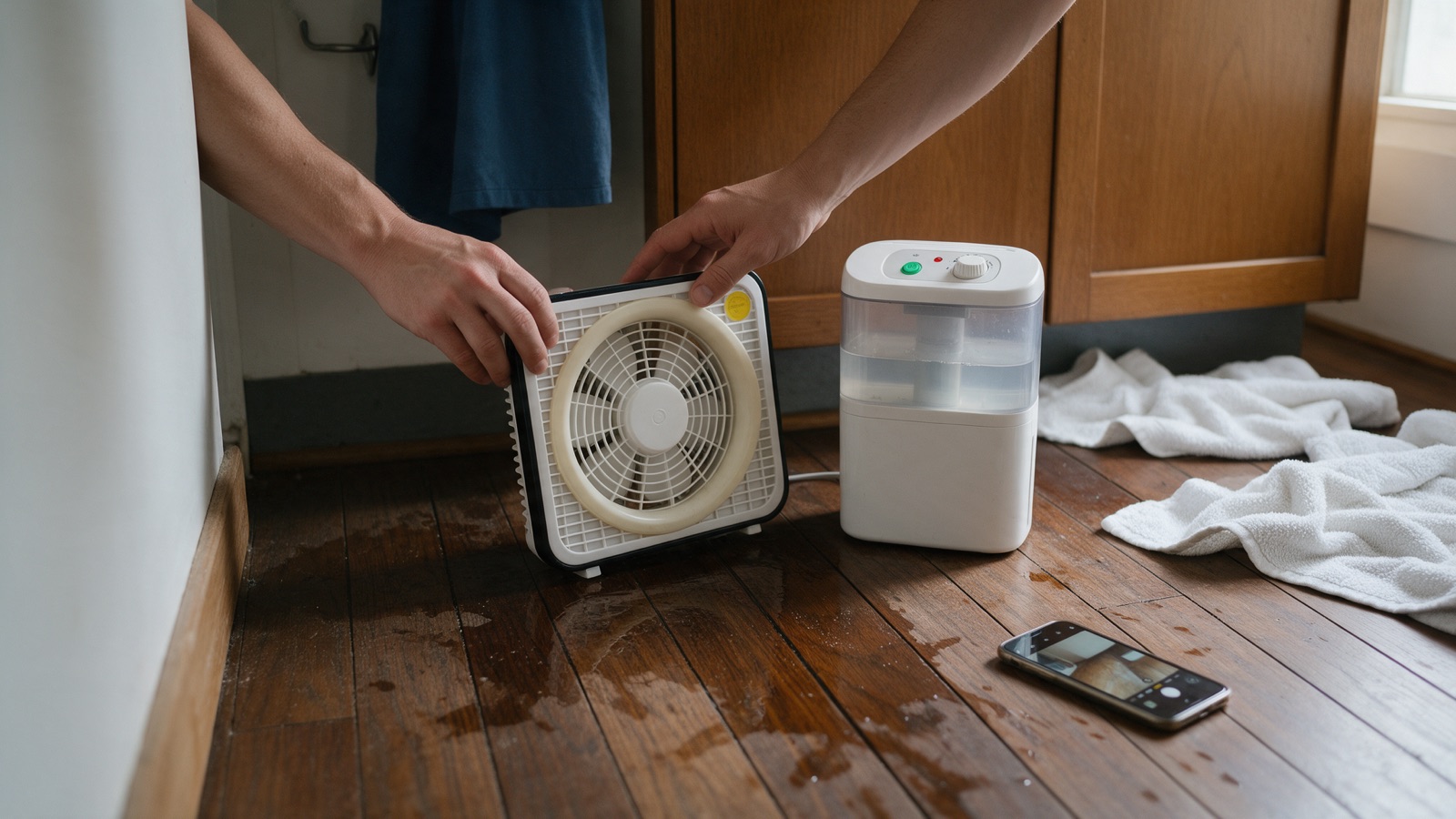
The First 48 Hours After a Leak: A Homeowner's Hour-by-Hour Checklist
Not every leak is an emergency, and we would be doing you a disservice to pretend otherwise. A weeping supply line under a sink, a washing machine hose that dripped overnight, a window that let in a storm: these are often a Saturday of drying and nothing more. What decides which side of the line you land on is mostly what you do in the first two days, so here is the whole sequence, hour by hour.
Why the first 48 hours matter
Wet building material begins to colonize in roughly 24 to 48 hours. That is the clock behind everything below. Inside the window, a wet floor or wall is a drying problem. Past it, the same materials can be a mold problem, and the bill changes character.
The window is not a cliff. A thin film of clean water on a sealed floor is forgiving. Water that soaked into drywall, carpet pad or the subfloor is not. So the aim of the first two days is simple: stop the water, record what happened, and get moisture out of anything porous before it has time to sit.
Hour zero to one: stop it and make it safe
- Shut off the water at the sourceUse the fixture shutoff valve under the sink or behind the toilet. If you cannot find it or it will not turn, use the main shutoff where the line enters the house. Everything else waits behind this.
- Kill the power to the wet area at the breakerUse the breaker, not the switch in the wet room. Standing water and floor-level outlets do not mix, and a wet ceiling can hold water above a light fixture.
- Decide what kind of water it isClean supply water, such as a pipe or a fixture, is the forgiving kind. Sewage, a toilet that overflowed past the trap, or floodwater from outside carries bacteria with it, and that changes the plan. See the stop box below.
- Get people and pets out of the wet areaWet floors are slippery and wet ceilings can sag without warning. Do not stand under a bulging ceiling to look at it.
Stop here if the water was sewage, floodwater, or came through a ceiling light
Sewage and floodwater are not a DIY drying job, and neither is a ceiling holding water. Keep everyone out, leave the power off, photograph from the doorway, and call 202-798-7663 or book emergency water damage help. Porous material that touched contaminated water has to come out rather than dry.
Hour one to two: photograph before you touch anything
This is the step people skip because it feels like paperwork while the floor is wet. It is the most valuable ten minutes of the whole 48 hours. The evidence exists until the moment somebody starts cleaning up.
- A wide shot of each affected room, then close-ups of the source, the wet material and any water line on the wall.
- Something for scale in each frame, like a tape measure or a coin.
- A short video walking the room, narrating the date and time out loud.
- The make, model and age of the failed part, such as the supply line or appliance, if you can read it.
- Photos of damaged belongings before you move them.
Write down a simple timeline too: when you noticed it, when the water was shut off, what got wet, what you did and when. A carrier decides coverage partly on whether the event was sudden, and your own notes made that afternoon carry more weight than your memory three weeks later.
Hour two to six: get the water out and the air moving
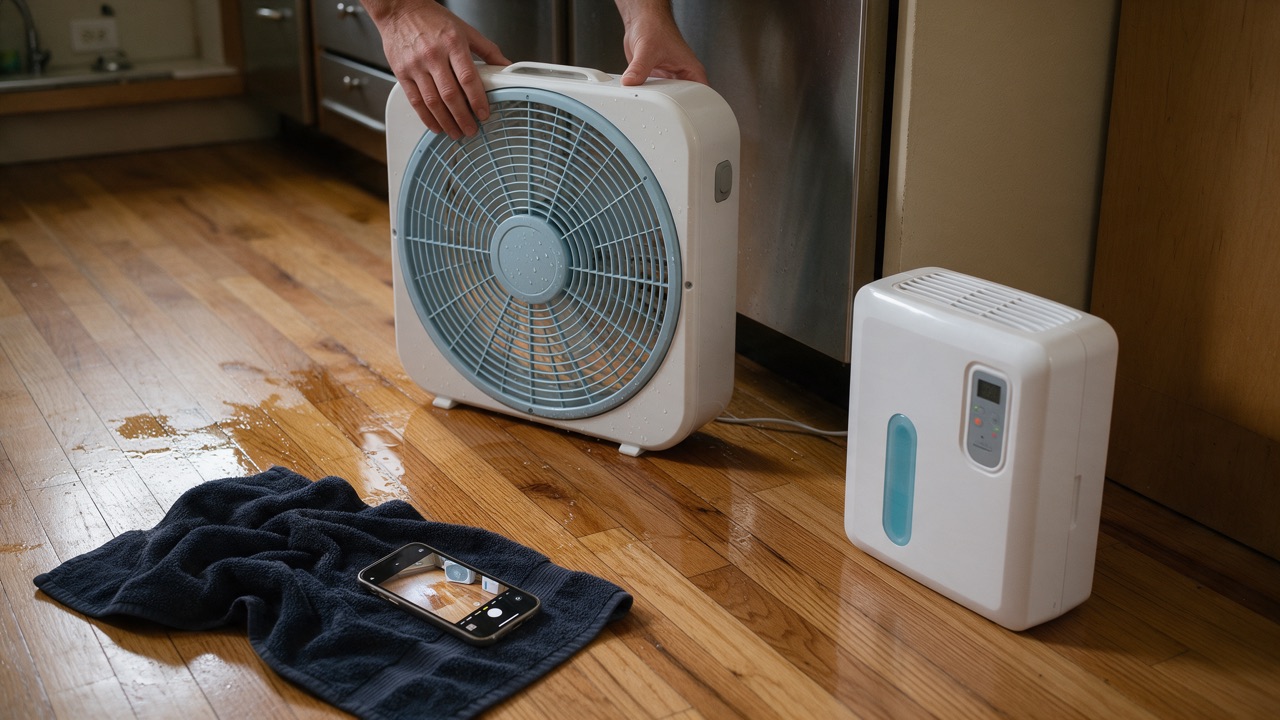
Now you can start removing water. Do it in order of how much water there is.
- Remove standing water firstMop, towel, or use a wet/dry shop vac. Wring towels outdoors or into a bucket, not back onto the floor. Do not use a household vacuum on water.
- Lift what is holding waterPull area rugs, pillows, books and cardboard off the floor. Put foil or small blocks under furniture legs so wood and metal do not stain carpet or hardwood.
- Open cabinet doors and pull drawers outA cabinet base that stays closed can trap moisture against the back of the kickplate for days.
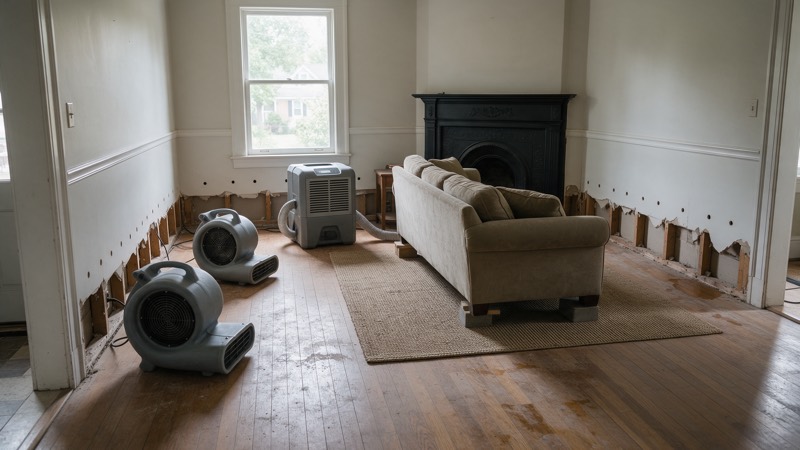
- Aim fans at the wet surface, not around the roomA box fan across a wet floor dries it. A box fan blowing in a window just moves air. Keep the room closed so you are drying it, not ventilating the rest of the house.
- Run a dehumidifier in the closed roomFans move moisture off the surface, but the dehumidifier is what takes it out of the air so it does not settle somewhere else.
Hour six to twenty-four: find out how far it went
Surfaces that feel dry are not always dry. Water travels down inside a wall and sideways under flooring, and it shows up well away from the source.
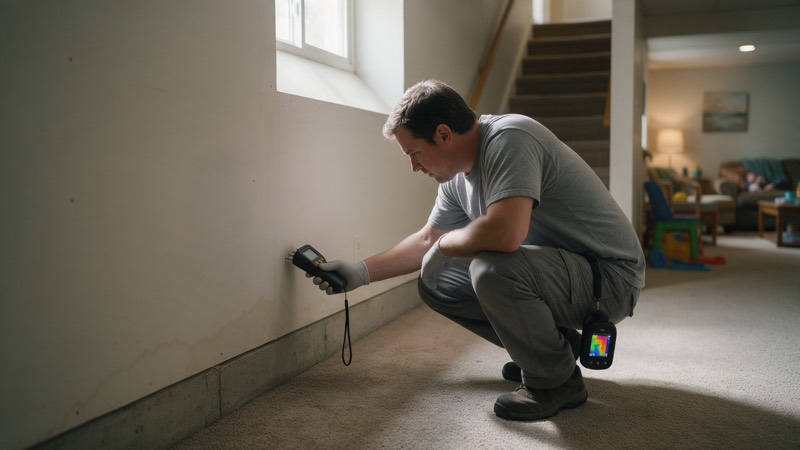
A pin-style moisture meter is the best tool you can buy for this. Take a reading on a dry wall in the same room, so you know your baseline, then check the wet area and a foot or two beyond what looks wet. Readings that stay above your dry baseline after a day of drying tell you moisture is still in the material.
Also look and smell. Baseboards that have started to lift, paint that is bubbling, a floor that cups at the edges, or a damp smell in a room that did not have one are all signs the water went further than the stain. If it traveled into a finished lower level, the stakes are higher, and our basement guidance covers why.
Hour twenty-four to forty-eight: what comes out
By the second day you are deciding what can be saved. A general rule that holds across the Mid-Atlantic:
- Usually dries in place: sealed hardwood and tile floors, solid wood furniture, the framing behind a wall that was only briefly wet.
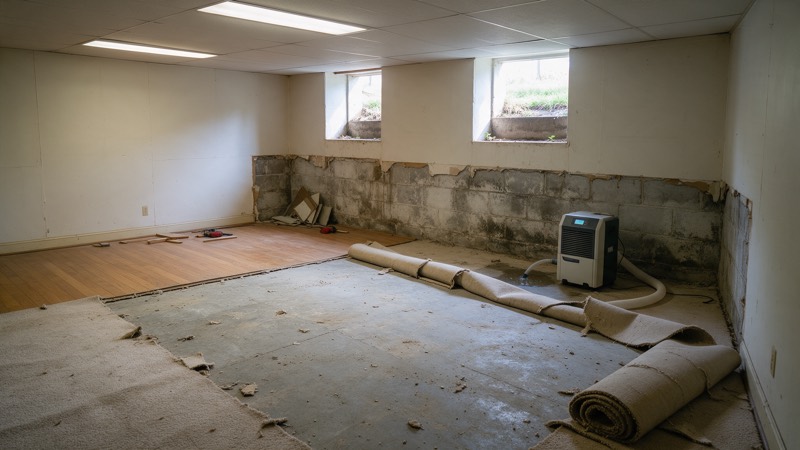
- Usually comes out: carpet pad, which is almost never worth saving, along with wet insulation and drywall that stays soft or keeps reading wet after a day of drying.
- Case by case: carpet itself, laminate and engineered flooring, and anything particleboard, which swells and does not return.
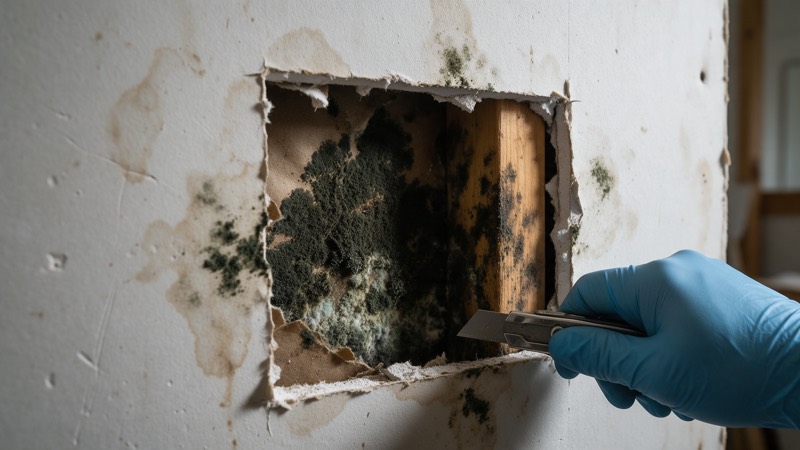
Pulling a wet carpet pad on day one is the difference between drying and remediating more often than anything else we see. If you are not sure about a wall, a small inspection hole at the bottom of the drywall lets you see and touch the cavity. Photograph it before and after.
Do not paint, caulk, or close anything up while it is still damp
Sealing wet material in is how a drying job becomes a mold job. Wait until the meter reads the same as your dry baseline, and keep the dehumidifier running a day beyond when it feels dry.
What it costs: doing it yourself versus hiring it out
The honest comparison. A small, clean-water leak caught fast is cheap to handle yourself. Past that, the professional number is paying for extraction equipment, engineered drying and daily moisture readings, which are also what your carrier wants to see. The professional ranges below match the ones on our water damage page.
| Situation | Doing it yourself | Hiring it out |
|---|---|---|
| Small clean-water spill on a sealed floor, caught right away | Towels and a box fan you may already own | Not needed |
| Single-room leak that soaked carpet, pad or drywall | Wet/dry vac, fans and a rented or owned dehumidifier | $1,500–$4,000 complete |
| Emergency extraction and equipment setup | Not realistic past a small spill | $500–$1,500 |
| Structural drying, per day | Not a DIY job | $200–$600 per day, typically three to five days |
| Multi-room or whole-floor water loss | Not a DIY job | $4,000–$15,000 |
| Sewage or Category 3 cleanup | Never a DIY job | $2,500–$12,000 |
The cheapest version of every row is the one handled inside the first two days. Typical range for this market — not a quote. Every property is different, and the number that matters is the written scope you get after the free inspection.
And what a basic kit costs if you want to be ready before the next one:
| Item | Why it is on the list | Typical cost |
|---|---|---|
| Pin-style moisture meter | Tells you whether a wall or floor is actually dry. | $25–$60 |
| Wet/dry shop vac | Removes standing water far faster than towels. | $60–$120 |
| Box fans, two | Moves moisture off a wet surface. | $25–$45 each |
| 50-pint dehumidifier | Pulls moisture out of the air in a closed room. | $200–$350 |
| Contractor bags and old towels | For anything that has to leave the house. | $10–$25 |
Retail figures are ordinary store prices and vary by brand and season. Typical range for this market — not a quote. Every property is different, and the number that matters is the written scope you get after the free inspection.
Insurance: call early, document everything
Open the claim before you hire anyone for the work itself, and keep your receipts for emergency steps like the shop vac rental and the dehumidifier. Many policies reimburse reasonable steps taken to prevent further damage, but what is covered depends on your policy and on whether the cause was sudden, so ask your carrier directly rather than assuming.
Sump failure and burst pipes are commonly covered, while groundwater and surface flooding usually need separate flood coverage, and sewage backup needs a specific endorsement. Your photos, timeline and moisture readings are the backbone of any of these. If a loss turns into suspected mold, an independent inspection gives you a record that does not depend on who is paid to fix it.
What to do after the first 48 hours
If the meter reads at baseline, the smell is gone and nothing is lifting or staining, you are done. Keep the dehumidifier running a few more days, and recheck the spot in two weeks. A damp reading or a musty smell then means water is still in there, and that is the point where a free inspection is worth an hour.
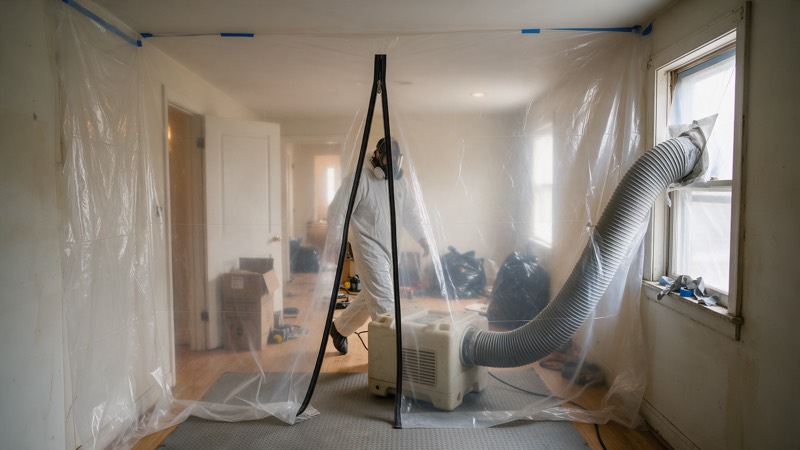
If the material is already showing growth, the rules change. Under about ten square feet on a hard surface it can still be a homeowner job, and our DIY mold playbook walks through it. Beyond that, or on drywall and other porous material, it needs containment, and remediation is the next step.
Where you stop
Call somebody, us or anyone competent, when any of these are true:
- The water was sewage, floodwater, or anything other than clean supply water.
- It came through a ceiling, or a ceiling or wall is bulging or sagging.
- The area is larger than a single room, or water traveled into a wall, a finished basement or the floor below.
- It has been wet for more than 24 to 48 hours and the material is still damp or soft.
- Anyone in the house is immunocompromised, pregnant, an infant, or has significant respiratory disease.
- You see or smell mold, or readings will not come down after a day or two of drying.
If you are past hour 48 and it is still wet, do not keep drying on your own
At that point a homeowner with a box fan is mostly hiding the problem. Photograph what you have, stop sealing or covering anything, and call 202-798-7663 or book the free inspection so someone can take readings and tell you honestly whether it needs professional drying.
Not sure which side of the line you are on?
The inspection is free and we will tell you honestly if it is a job you can do yourself.