Musty Air When the AC Kicks On: The Condensate Drain You Can Clear Yourself
The smell is not always mold, and you do not always need a contractor. Plenty of the musty air we get called about turns out to be a slimy, half-blocked condensate drain, which is a job a patient homeowner can finish before lunch. The catch is that a few of the other causes look identical from the living room, so it pays to know which one you have before you start.
Why the smell shows up when the system starts
Your air conditioner pulls moisture out of the air as it cools it. That water collects on the evaporator coil, drips into a pan, and leaves the house through a drain line, usually a white PVC pipe that ends near the foundation or at a floor drain. In a humid Mid-Atlantic summer a system can remove several gallons of water a day.
Anything that stays wet and dark will grow something. A pan with an inch of standing water, a line coated in algae slime, or damp insulation around the coil gives microbes a comfortable home, and the blower carries the smell straight to your registers. That is why the odor is strongest a few minutes after the system kicks on.
Confirm it is the system, not the room
Before you touch the drain, spend ten minutes ruling things in or out. Smells that track with the equipment are very different from smells that live in one corner of a basement.
- Smell it at the register, then away from itHold your face near a supply register right after the system starts, then check a room with no vents. If only the register smells, the air handler is a suspect.
- Check several roomsAn even smell at registers in rooms with no other moisture problem points at the system. A smell concentrated in one spot points at that spot.
- Look at the filterPull it and look. A filter that smells musty or shows fuzzy spotting tells you the moisture is upstream on the coil side.
- Find the drain termination outsideWalk the exterior and look for the end of the PVC line. In running cooling weather it should drip or run. Dry in July usually means blocked.
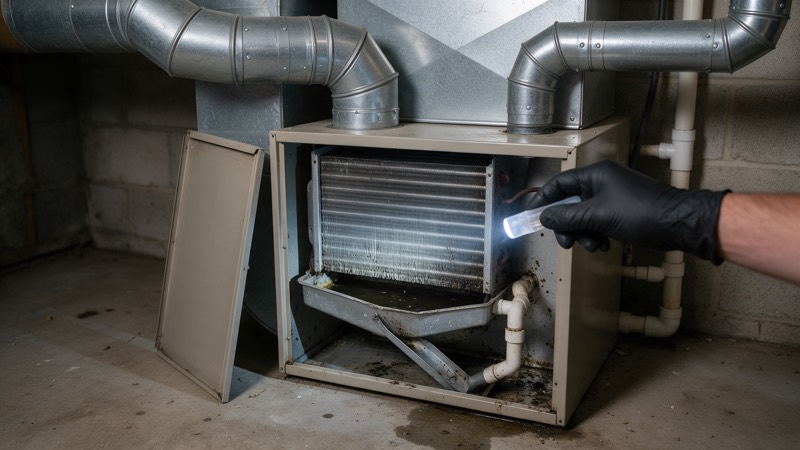
- Look at the pan if you can see itMany air handlers have an access panel and a visible pan. Standing water, slime, or rust in the pan confirms the diagnosis.
Turn the system off first
Switch the thermostat to off and, if you plan to open anything, flip the air handler breaker. Water and a live blower motor are a bad pair, and every extra cycle distributes what is growing inside.
What you need for the drain job
Everything here is ordinary hardware store gear. A wet-dry vacuum is the one item many households already own, and a neighbor will usually lend one.
| Item | Why you want it | Typical cost |
|---|---|---|
| Wet-dry vacuum (borrow or rent if you do not own one) | Pulls the clog out through the drain line from the outside end. | Borrow free, or about $40–$60 to rent for a day |
| Distilled white vinegar, one gallon | Dissolves light algae film in the line and pan. | $3–$6 |
| Duct tape and a rag | Seals the vacuum hose to the pipe end for suction. | $5–$8 |
| N95 respirator and nitrile gloves | Slime and dust from the pan are not something to breathe or touch. | $10–$15 |
| Flashlight and a small mirror | Lets you see into the pan through the access panel. | $8–$12 |
| Replacement filter | You will want a clean one to put back. | $8–$25 |
| Condensate pan tablets (optional) | Slow-dissolving tablets that discourage slime between cleanings. | $8–$15 |
Core supplies if you already have a vacuum: roughly $30–$60. Typical range for this market — not a quote. Every property is different, and the number that matters is the written scope you get after the free inspection.
Clearing the drain line step by step
- Power down the systemThermostat off, then the air handler breaker. Nothing should be running while you work.
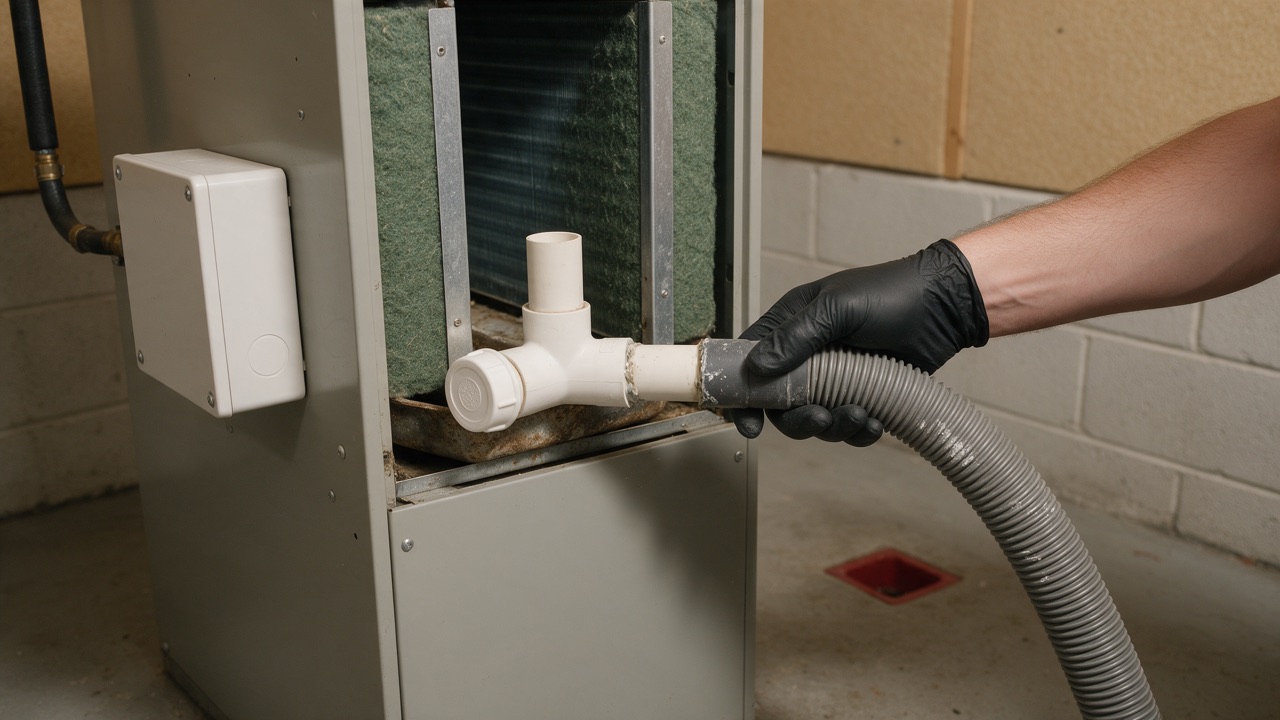
- Find the outside end of the lineLook for the PVC pipe that exits near the foundation. If it ends in a tee with a cap or vent, remove the cap.
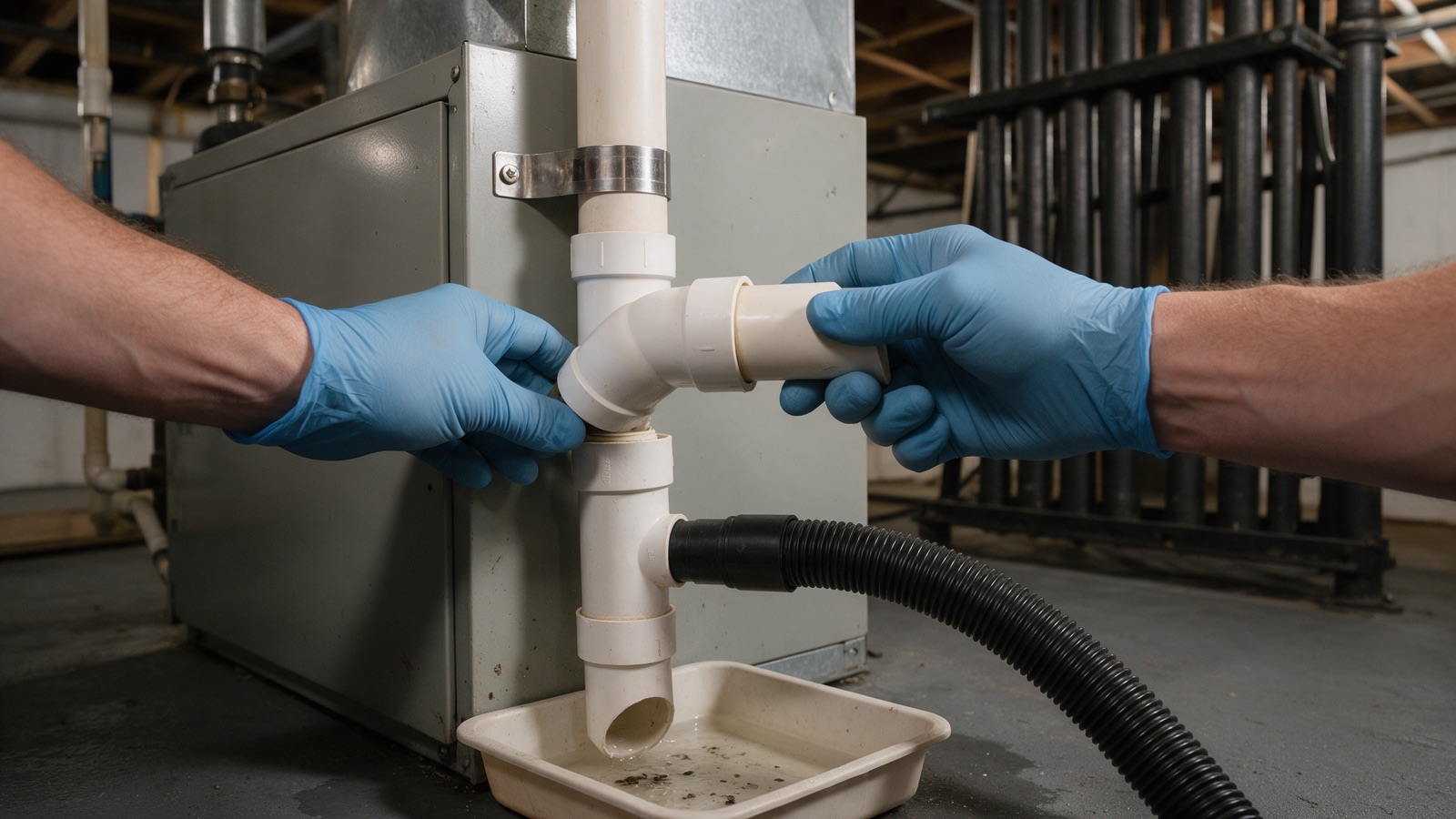
- Seal the vacuum hose to the pipeWrap rag and duct tape around the joint so the hose pulls air only through the drain.
- Run the vacuum for a minute or twoYou should hear a change when the plug releases, and water or gray slime will often show up in the canister. Run it another minute after that.
- Flush with vinegarAt the indoor access tee, pour about a cup of vinegar slowly down the line. Wait half an hour, then flush with a quart of clean water.
- Clean the panWith the panel open, wipe standing water and slime out of the pan with a rag and a vinegar-and-water mix. Bag the rag.
- Put in a clean filter and restartRestore power, set the thermostat to cool, and go outside to confirm water is now leaving the line.
Check that it worked
Give the system a full cooling cycle and walk back to the registers. A fresh smell and water running out the drain end are the two signs you want. If the smell is fading but not gone, run it another day or two, because the filter and the duct surfaces may still hold residue.
Do this once a season and the problem stays away. A common routine is a cup of vinegar in the line each spring and fall, plus a filter swap on schedule. It takes ten minutes and costs next to nothing.
Other cheap causes worth checking
If the drain is clear and the smell remains, there are a few other homeowner-level suspects before you pick up the phone.
- An overdue filter. A loaded, damp filter smells on its own. Replace it and see.
- A window unit or portable AC. Their pans hold standing water and smell like a damp basement on startup. Empty and wipe them.
- A dehumidifier bucket or humidifier tank. Both grow slime in standing water. Clean them with vinegar.
- A dry floor drain trap. A basement floor drain that has dried out lets sewer gas up. Pour a quart of water down it.
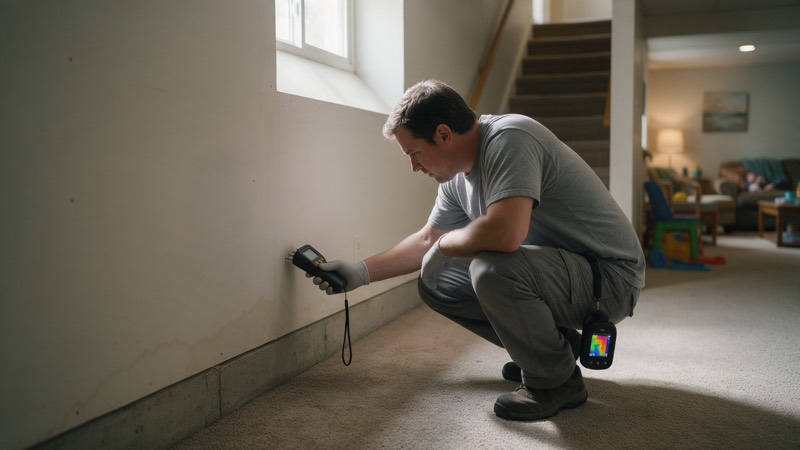
An inexpensive hygrometer in the basement is worth having through all of this. Readings that sit above 60% relative humidity for days tell you the house itself is feeding the problem, which a drain cleaning alone will not fix. Our basement mold page covers what that looks like.
What it costs: doing it yourself versus hiring it out
The gap is wide for the plain clogged-drain case and narrows fast as the problem moves into the equipment. Professional figures below follow the typical ranges we publish on our HVAC and duct mold page.
| Situation | Doing it yourself | Hiring it out |
|---|---|---|
| Clogged condensate drain, light slime | $30–$60 in supplies, about 30 minutes | $250–$900 for drain correction and pan replacement |
| Seasonal prevention | $10–$25 a year in vinegar, tablets, and filters | Not usually hired out |
| Finding out whether the system is the source | Free, using the checks above | $200–$450 for inspection with coil and plenum access |
| Growth on the coil, plenum, or air handler | Not a DIY job | $800–$2,500 |
| Colonized duct liner or flex run | Not a DIY job | $1,500–$6,000 |
| Full duct cleaning with HEPA and antimicrobial | Not a DIY job | $700–$2,000 |
If your situation sits in a "not a DIY job" row, the cheapest version is the one done before the growth spreads. Typical range for this market — not a quote. Every property is different, and the number that matters is the written scope you get after the free inspection.
Where you stop
The drain job is for a system that is otherwise sound. Stop and get it looked at if any of these are true:
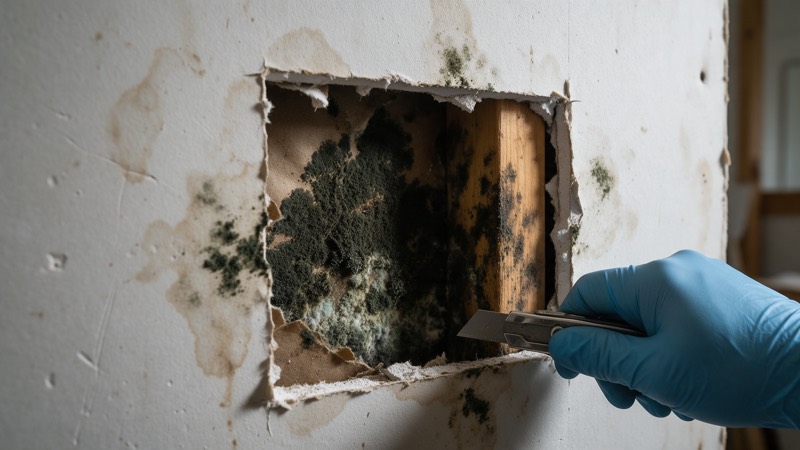
- You can see fuzzy or dark growth on the coil, inside the air handler, or on the plenum insulation.
- The smell does not change after a clear drain, a clean pan, and a new filter.
- Water is leaking from the cabinet or has stained the ceiling or floor below.
- The ducts are porous internal liner or older flex, and the smell is strong at every register.
- Anyone in the home is immunocompromised, pregnant, or asthmatic, or reports symptoms that ease when they leave the house. Symptoms are a conversation with a doctor, not something we can diagnose.
Do not open ducts or scrub growth inside the air handler
Disturbing visible growth in a running or recently run system sends spores through every duct run. Shut the system off, leave the cabinet closed, and call 202-798-7663 or book through our Calendly link. An inspection with coil and plenum access is the next step.
Never pour bleach into the drain line
It can corrode the pan and metal fittings, and it will not reach what is growing on the coil. Use vinegar, and never mix cleaners.
Region notes and next steps
Our summers are humid enough that a drain line runs for months, which is exactly the condition slime loves. Older rowhouses in DC often tuck an air handler into a basement closet or attic where the pan is hard to see, and homes across Northern Virginia frequently route the drain to a floor drain that dries out in winter.
If you have done the checks above and the system is still suspect, the next step is a proper look at the coil side. Our inspection is free for the visual walk-through, and it will tell you whether you have a small problem or a bigger one.
Not sure which side of the line you are on?
The inspection is free and we will tell you honestly if it is a job you can do yourself.