Are Hardware Store Mold Test Kits Worth It? An Honest Answer
Mold test kits are not a scam, and we will not pretend they are useless. A kit does what it says: it catches spores and lets them grow. The trouble is that the question most people are asking, "is my house safe?", is not one a twenty-dollar kit can answer. Here is what it can tell you, what it cannot, and what to spend your money on first.
What the kit actually does
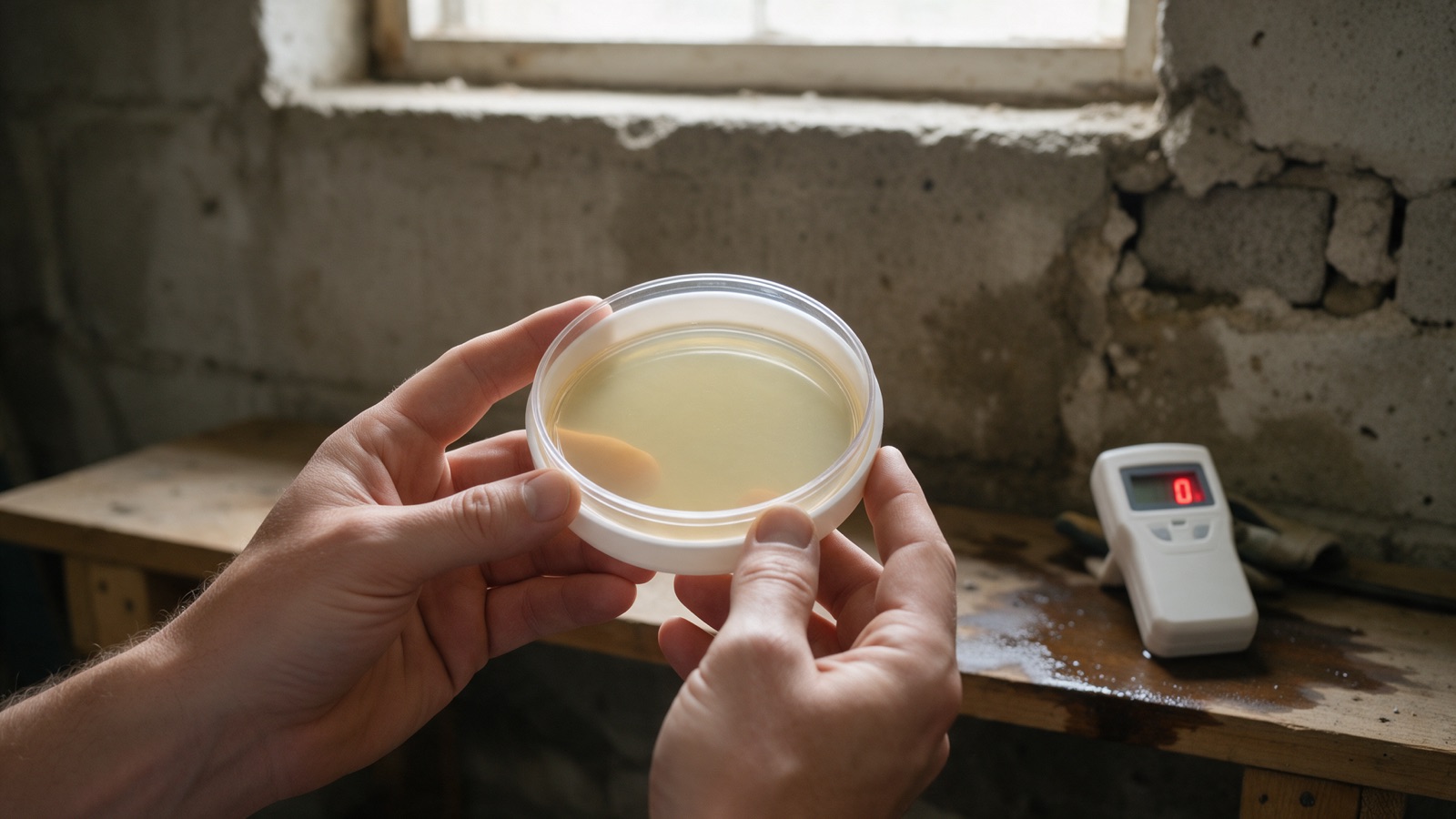
Most hardware store kits are a settle plate: a small dish of growth medium that you open and leave out for a set period, then close and either watch or mail to a lab. Spores floating in the room drift down onto the dish. If they land and conditions are right, colonies grow.
That is a real measurement of one thing: whether viable spores settled on that dish, in that spot, during those hours. It is not a measurement of how much mold is in your walls, whether the amount is high, or whether anyone is at risk.
Why nearly every kit comes back positive
Mold spores are part of ordinary air, indoors and out. Every house in DC, Northern Virginia, and Maryland has them, and they ride in on shoes, pets, and open windows. A dish left on a table for an hour will usually grow something.
So a positive result does not mean you have a problem, and the colorful photos on the box do not change that. A negative result is no better. A kit left out in a still room can miss a hidden colony behind a wall, which is exactly where the trouble tends to be.
The gap that matters
A useful air test compares indoor spores against an outdoor sample taken the same day. A single dish with no outdoor comparison has nothing to be compared to, so there is no way to say whether the number is normal. This is why professional sampling always includes an outdoor control, as described on our inspection page.
Cheaper things to do first
Before you buy a kit, use your eyes and nose, and add one small tool. Mold needs moisture, so the water question is almost always the one that matters. You can answer it for a fraction of what a test costs.
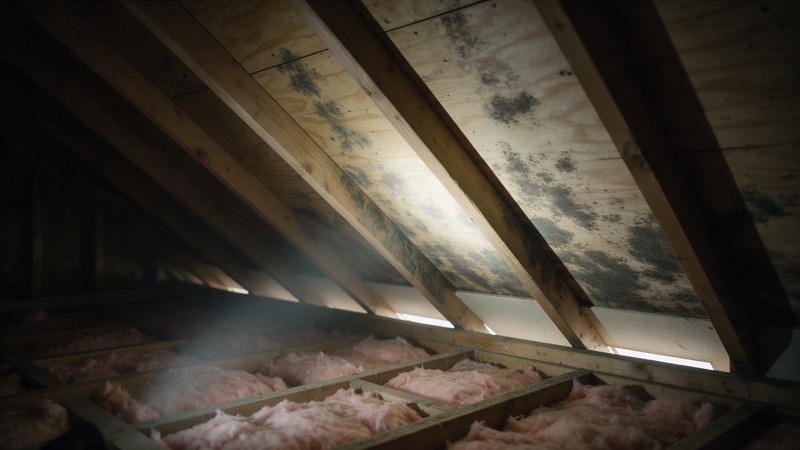
- Look where water collectsCheck under sinks, around the base of the toilet, window sills, the corners of exterior walls, the ceiling below a bathroom, and behind furniture pushed against a basement wall. Use a flashlight and look for staining, bubbling paint, and a dark fuzzy or speckled film.
- Follow your noseA persistent musty smell that is stronger in one room points to a source in or near that room. Try closing a door for a few hours and smelling again when you open it.
- Read the humidityA small digital hygrometer shows relative humidity. Indoor air that sits above about sixty percent for long stretches is the kind of environment mold likes. Put one in the basement and one upstairs and compare.
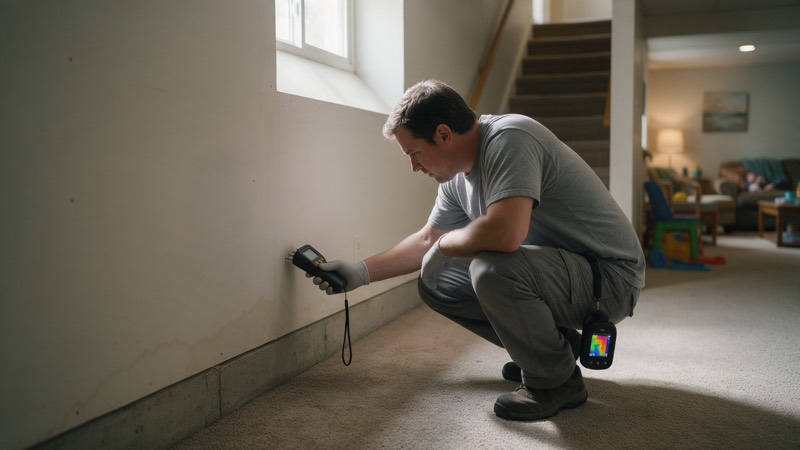
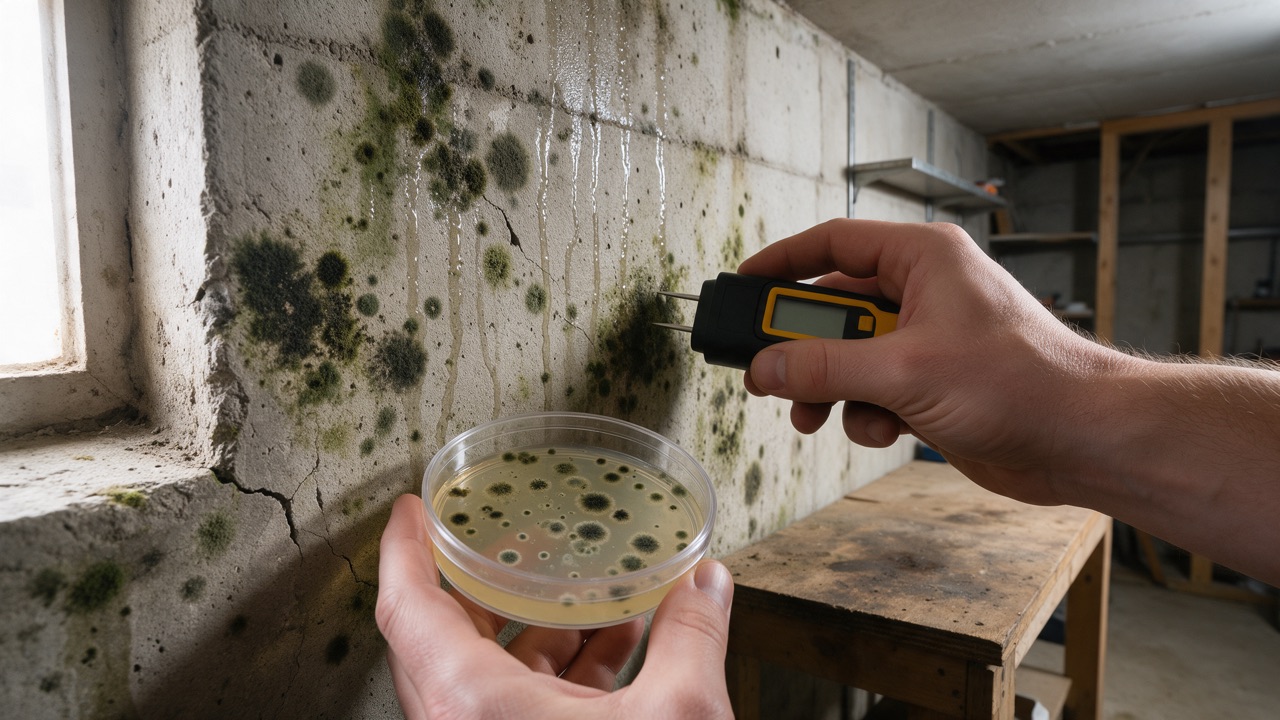
- Check the wall with a moisture meterA pin or pinless meter reads how wet a surface is. Compare a suspect spot against a wall you know is dry. A big jump tells you there is moisture inside the material even if you cannot see it.
- Photograph what you findTake a wide shot and a close-up with something for scale. Dated photos are useful later for a landlord, a buyer, or an insurer.
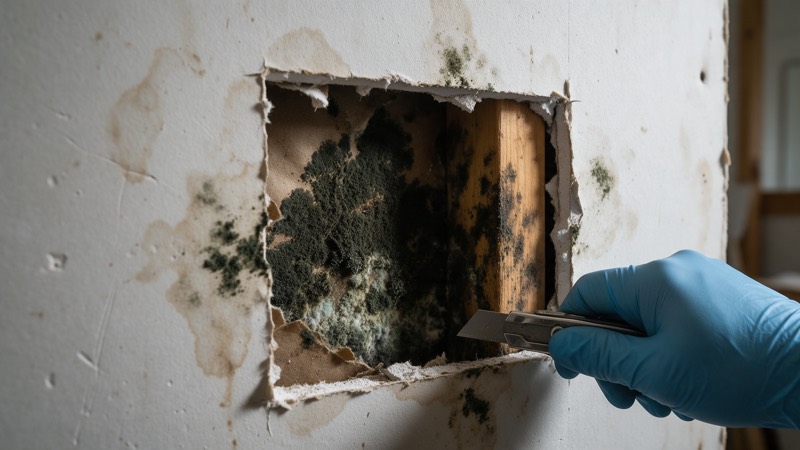
If you can see growth, you already know what a test would tell you: you have mold. Testing it will give you a species name and will not change the response, which is to fix the water, remove the affected material, and verify afterward. Our DIY mold playbook covers what is safe to clean yourself.
When a test is actually worth paying for
There are real situations where testing earns its cost. They share a feature: you need an answer you cannot get by looking, or one that someone else has to accept.
- You smell mold but cannot find it. Sampling plus moisture mapping can point to a hidden source.
- A dispute is involved. A tenant and landlord, or a buyer and seller, may each need something neutral on paper.
- A lender, buyer, or insurer wants documentation. They generally want a written report from a third party, not a kit result.
- You want to confirm a cleanup worked. Post-remediation clearance testing is done by an independent hygienist for a reason.
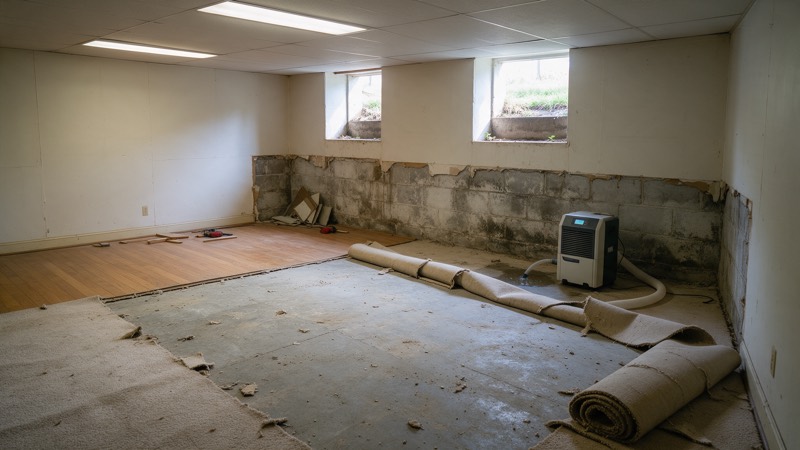
If none of those fits, spend the money on fixing the water instead. Where growth is visible in a damp basement, the next step is usually the fix, and our basement mold page explains what that looks like.
What a professional test adds
The difference is not the lab. It is the method. A professional takes several air samples in different rooms, adds an outdoor control, records conditions, and pairs the results with moisture readings and a thermal camera. The lab is accredited and independent, and the report explains what the numbers mean in context.
That context is what makes a result usable. A reading of spore counts that is meaningless on its own becomes meaningful when it is compared with outdoors and with the rest of the house. Be cautious about any company that tests and then quotes its own removal work. The person who writes the scope should not be the person paid to perform it.
What it costs
The DIY items below are ordinary retail prices. The professional figures match the ranges on our inspection page. They are typical ranges for this market, not quotes.
| Item or situation | Who does it | Typical cost |
|---|---|---|
| Hardware store settle plate kit | You, with a result that has no outdoor comparison | $10–$40 |
| Mail-in lab kit, per sample | You, with a lab read of one sample | $40–$100 |
| Digital hygrometer | You, to track humidity | $10–$25 |
| Moisture meter | You, to find damp walls | $25–$60 |
| Flashlight, N95 respirator, and gloves | You, for a safe look | $20–$40 |
| Visual inspection with moisture mapping | Hired out | Free, no obligation |
| Surface or tape-lift sampling, per sample | Hired out | $75–$150 |
| Air sampling, three samples plus outdoor control | Hired out, accredited lab | $350–$600 |
| Full written assessment with protocol | Hired out, accepted by lenders and buyers | $500–$1,200 |
| Post-remediation clearance testing | Hired out, by an independent hygienist | $450–$800 |
Typical range for this market — not a quote. Every property is different, and the number that matters is the written scope you get after the free inspection.
The pattern is clear. Several cheap DIY tools together cost less than one mail-in lab sample, and they answer a more useful question. Spend the larger figure only when you need a document that someone else will accept.
Mistakes people make with kits
- Treating a positive as an emergency. Spores are normal. A colony on a dish is not a diagnosis of the house.
- Treating a negative as an all-clear. A still, closed room can miss a hidden source, so keep looking if the smell persists.
- Testing before looking. If you can see growth, the test answers a question you have already answered.
- Opening the dish and stirring things up first. Disturbing a colony right before sampling skews the result and spreads the problem.
- Skipping the outdoor control. Without one, an indoor number has nothing to be compared with.
- Using a kit as medical evidence. A kit cannot tell you whether a symptom is related to mold. That is a question for a doctor.
A note on health and symptoms
People often reach for a kit because someone in the house feels unwell. We cannot diagnose anything, and neither can a petri dish. If a family member has symptoms, see a doctor. What we can say is that some people report feeling better after a damp source is fixed, and that a documented moisture problem is worth addressing for its own sake.
Where you stop
Do the look, smell, humidity, and moisture-meter checks yourself. Call a professional when any of these is true:
- You find growth covering about ten square feet or more.
- The meter reads high in a wall, ceiling, or floor and you cannot find the water source.
- Material is soft, bubbling, or crumbling, which suggests ongoing moisture.
- The smell persists and you cannot find a visible cause.
- Someone in the house is immunocompromised, pregnant, asthmatic, or an infant.
- Water came from sewage or flooding, which is a separate and more serious category.
- A lender, buyer, landlord, or insurer needs a written report.
Stop if the source is hidden, the area is large, or someone is vulnerable
Do not cut open walls to chase a smell, and do not scrub a large area to prove a point. Photograph what you can see and call 202-798-7663. A free visual inspection with moisture mapping is cheaper than guessing.
Do not let a kit talk you into or out of action
A kit result is one data point from one dish. If you can see growth or find a damp wall, act on that, not on the color of the dish.
The short version
A hardware store kit is not harmful, but it rarely tells you what you wish to know. Look first, measure humidity and wall moisture, and fix the water. Buy a professional test when you need an answer you cannot see or a document someone else will accept. For a free inspection across DC, Northern Virginia, or Maryland, call 202-798-7663 or book through Calendly on this site.
Not sure which side of the line you are on?
The inspection is free and we will tell you honestly if it is a job you can do yourself.