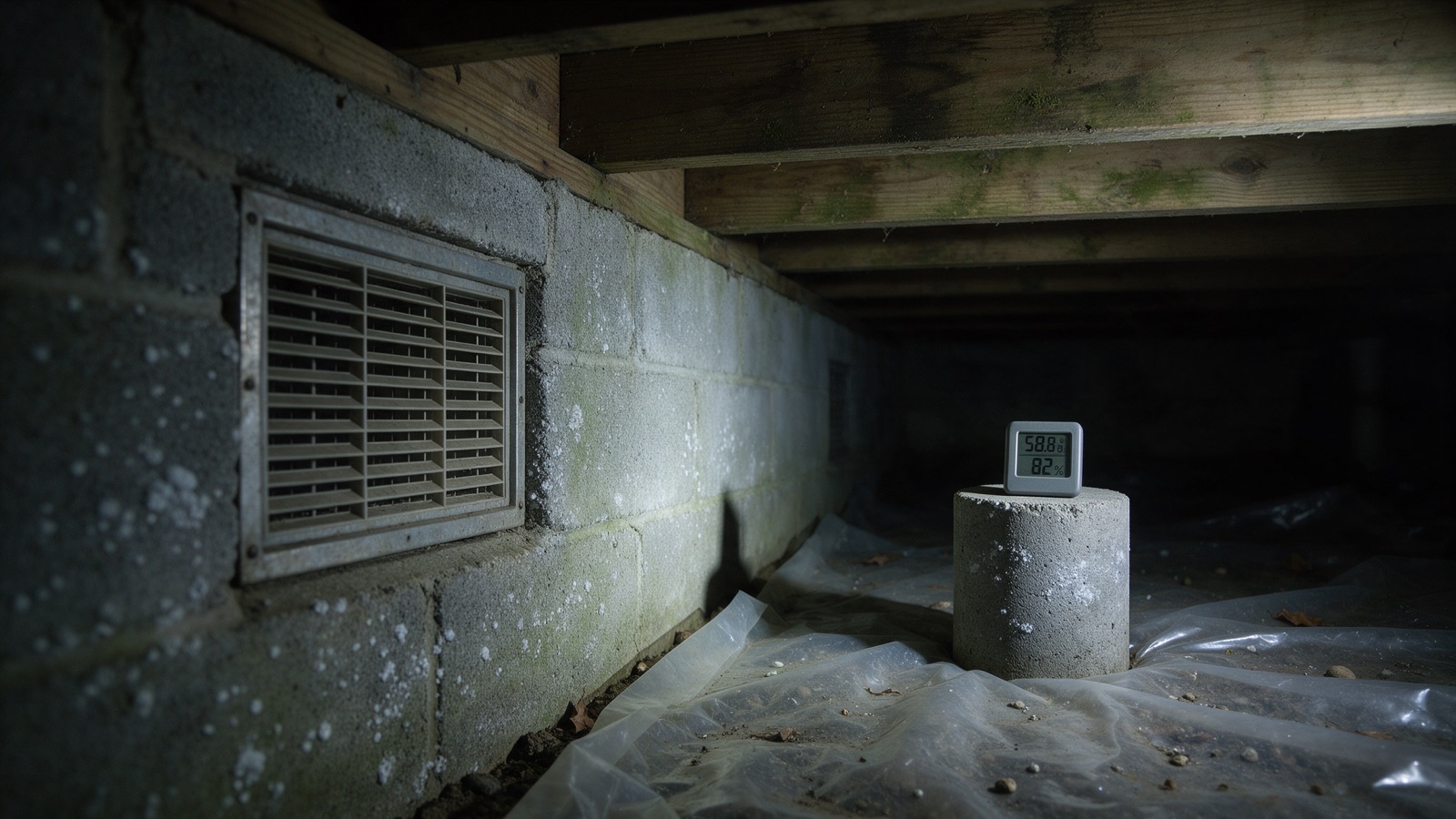
Close Your Crawl Space Vents in Summer: Yes, Really
You were probably told that a crawl space has to breathe, and for a dry climate that is fair advice. Here it is the reason your floors feel clammy in July. The advice is old, the building code once required the vents, and plenty of good contractors still repeat it. This article explains why it backfires in the Mid-Atlantic and what you can safely check yourself in one afternoon.
Why venting a crawl space backfires in summer
Air carries water vapor, and warm air carries a lot more of it than cool air. A July day in DC, Northern Virginia, or Maryland can bring air that is hot and thick with moisture. The ground under your house, and the floor joists above it, stay much cooler than that outside air.
When the humid air drifts through an open foundation vent and meets a cool surface, it drops below its dew point and the water comes out of it. That is the same thing that happens on the outside of an iced tea glass. The glass is your joist, your subfloor, or your uninsulated duct, and it stays damp for weeks.
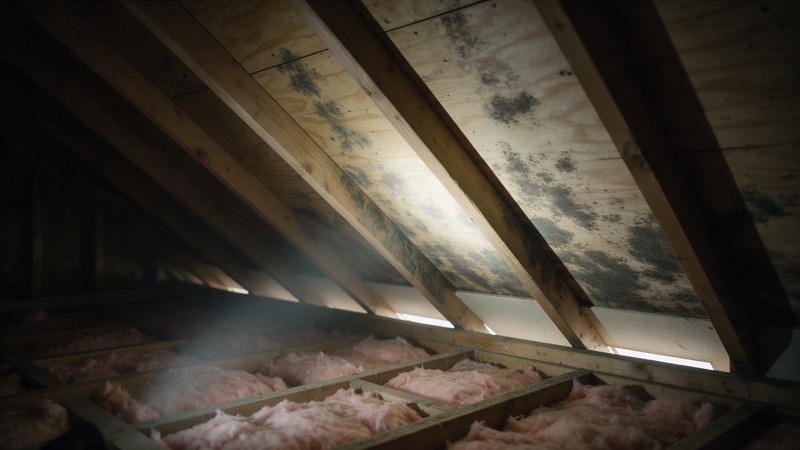
Wood that holds moisture for that long becomes a food source. Mold does not need a leak, only a surface that stays wet enough, long enough. That is why we find colonized joists in crawl spaces where nothing ever failed.
The stack effect finishes the job
A house behaves like a loose chimney. Warm air rises and leaves through the upper floors, and that pulls replacement air up from the lowest point, which is the crawl space. A meaningful share of the air upstairs started out under the floor.
So the damp, musty crawl space air does not stay there. It comes up through the gaps around plumbing, the rim joist, and the ductwork, and it carries the smell with it. If your first floor smells stale in summer and not in winter, the crawl space is a suspect.
Why winter looks different
In cold months the outside air is dry, so venting it in does little harm. The trouble is concentrated in the warm, humid stretch from late spring through early fall. That is also when most of the damage gets done.
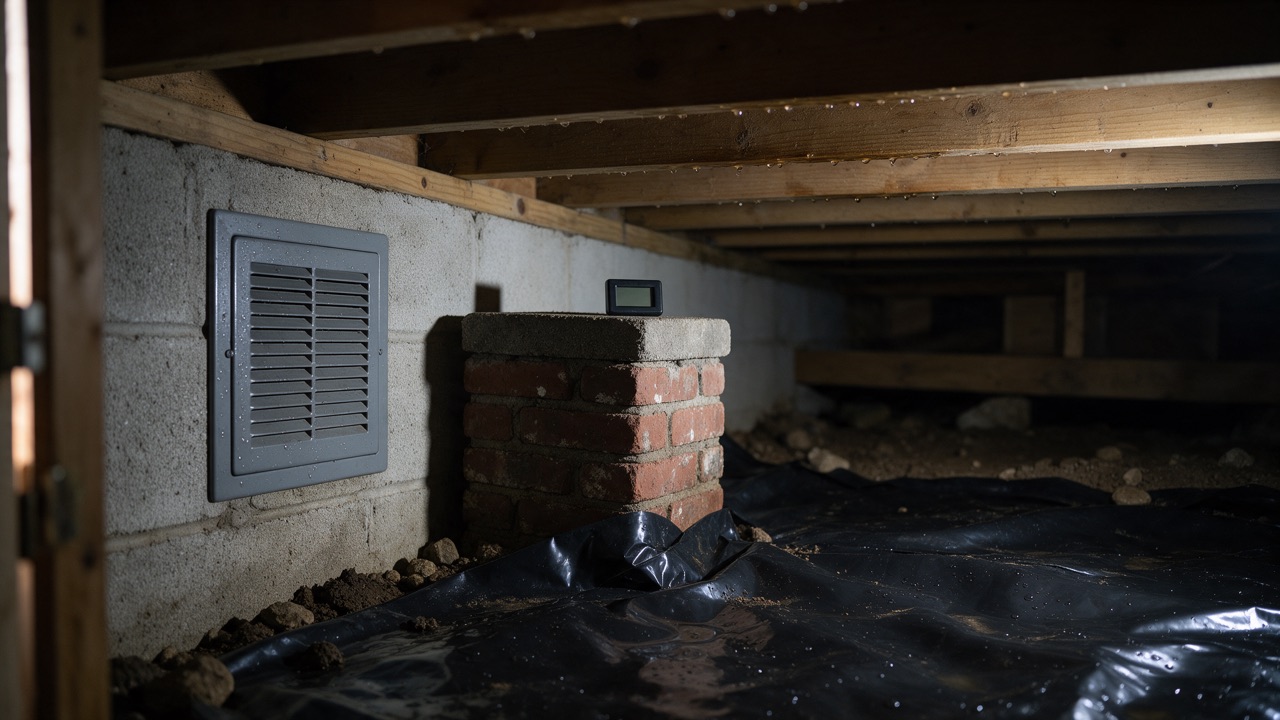
Check it first: five minutes with a hygrometer
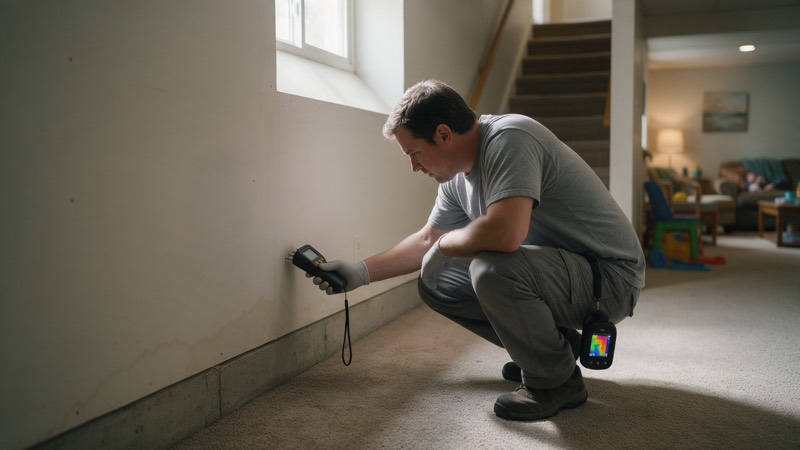
Do not close anything until you know what the space is doing. A hygrometer tells you in a day.
Put it on a pier or hang it from a joist near the middle of the crawl space, then check it after twenty-four hours. Compare it with the reading in your living room and with the outdoor humidity on a weather app. The numbers tell you more than any smell test.
- Under 55%: the space is fine. Leave it alone and keep watching it through August.
- 55% to 65%: borderline. Closing the vents and adding a dehumidifier is worth the effort.
- Over 65%, or above the outdoor reading: the vents are bringing the problem in. Act this season.
What to do this weekend
This is the sequence we would hand a homeowner who has a dry, accessible crawl space and no visible growth. It takes an afternoon, and nothing in it is permanent.
- Look for standing water and a sourceGo in with a flashlight and look at the ground. Dark, wet soil near a corner usually means a downspout or a bad grade outside. A drip from a supply line is a plumbing repair, not a humidity problem, and it comes first.
- Close the foundation ventsMost have a slide or a hinged flap. If yours do not, cut rigid foam board to fit from the inside and press it in snugly. Do this in the warm season only, and leave a note to yourself to reconsider if you ever see standing water.
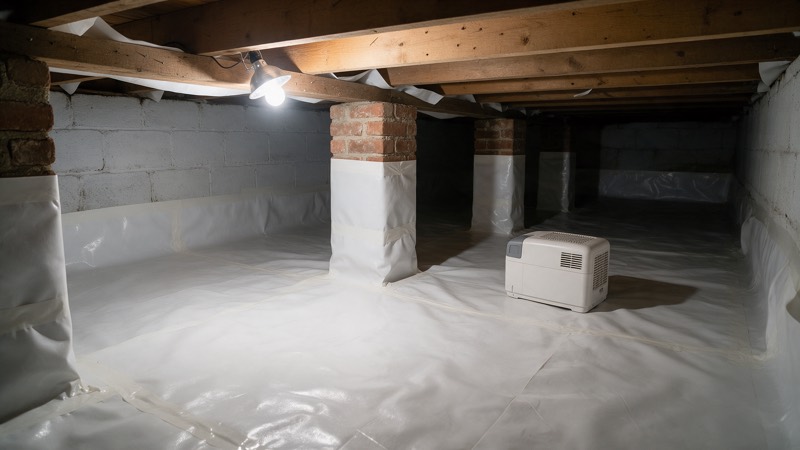
- Cover bare soil with plasticLay heavy polyethylene sheeting over exposed dirt, overlapping the seams by about a foot and running it up the piers and walls. This slows ground moisture. It only works if the ground is not actively wet underneath.
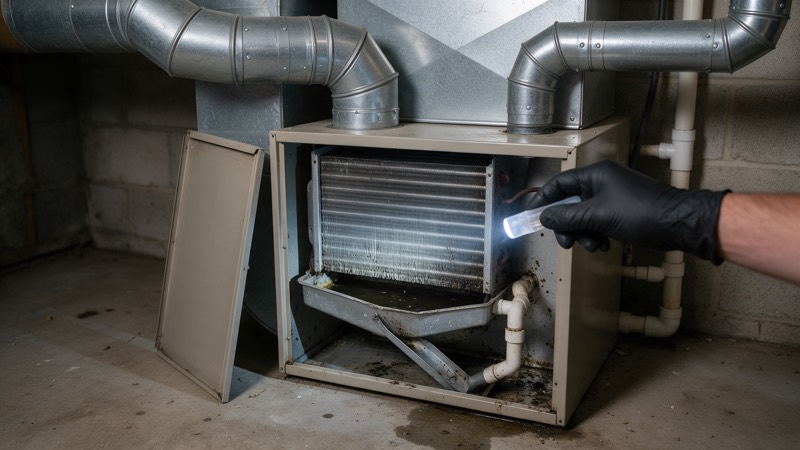
- Check the ductwork and insulationSweating ducts, disconnected flex runs, and fiberglass that has sagged and gone dark are all signs the space is wetter than it should be. Reconnect a loose duct with mastic tape; replace nothing that looks colonized yet.
- Add a dehumidifier or move air from the houseA unit rated for a crawl space, drained to the outside or a sump, holds the space steady. Without one, closed vents alone usually leave you short in August.
- Re-read the hygrometer for a weekYou are looking for the number to settle near 55% and stay there. If it does not move, you have a water source, not an air problem.
The shopping list
None of this requires a contractor, and most of it comes from a hardware store. These are ordinary retail ranges, and they vary with brand, store, and season.
| Item | Why you need it | Typical retail cost |
|---|---|---|
| Digital hygrometer | Tells you the real humidity, not a guess. | $10–$15 |
| 6 mil polyethylene sheeting, per roll | Covers bare soil. Thicker is better where you have room to work. | $60–$140 |
| Rigid foam board, per sheet | Seals vents that have no working cover. | $25–$45 |
| Seam tape and mastic | Joins plastic seams and reseals loose ducts. | $12–$30 |
| Dehumidifier rated for a crawl space | Holds the space dry in August. Needs a drain line. | $250–$500 |
| Respirator and gloves | Crawl spaces are dusty. Wear an N95 at minimum. | $15–$25 |
Retail estimates only. Check current store prices before you buy. Typical range for this market — not a quote. Every property is different, and the number that matters is the written scope you get after the free inspection.
What it costs: doing it yourself versus hiring it out
Below is the comparison. For a dry crawl space with a humidity problem, the DIY route is cheap and works. Once there is growth on the joists, standing water, or a dirt floor that stays wet, the professional column is paying for removal, drainage, and a sealed system that stays fixed. Professional figures match the ranges on our crawl space service page.
| Situation | Doing it yourself | Hiring it out |
|---|---|---|
| Humidity high, no growth, no water | $100–$250 closing vents and covering soil | Not usually needed |
| Keeping the space dry through August | $250–$500 for a dehumidifier | $1,200–$2,800 installed |
| Mold on joists or subfloor | Not a DIY job | $1,500–$5,000 for removal and HEPA treatment |
| Dirt floor, vented, repeat problem | Plastic only buys a season | $3,500–$12,000 for full encapsulation |
| Water entering the space | Fix gutters and grade first | $2,500–$9,000 for sub-slab or perimeter drainage |
| Rotted joists or subfloor | Not a DIY job | Quoted after inspection |
Always get the written scope before you compare prices. Typical range for this market — not a quote. Every property is different, and the number that matters is the written scope you get after the free inspection.
Common mistakes
- Laying plastic over wet ground. It traps the problem and hides it. Find and stop the water first.
- Closing vents in winter and forgetting. The point is to stop importing humid air. Reassess in the cold months.
- Leaving a damp dehumidifier bucket to fill. It stops working until someone empties it. Use a drain line.
- Spraying the joists with something and leaving. Surface treatment without changing the humidity buys you a season at best.
- Skipping the hygrometer. Without a number, every decision is a guess.
Where you stop
The afternoon above is for a crawl space that is dry underneath and clean on top. Past that, the right call is to get help.
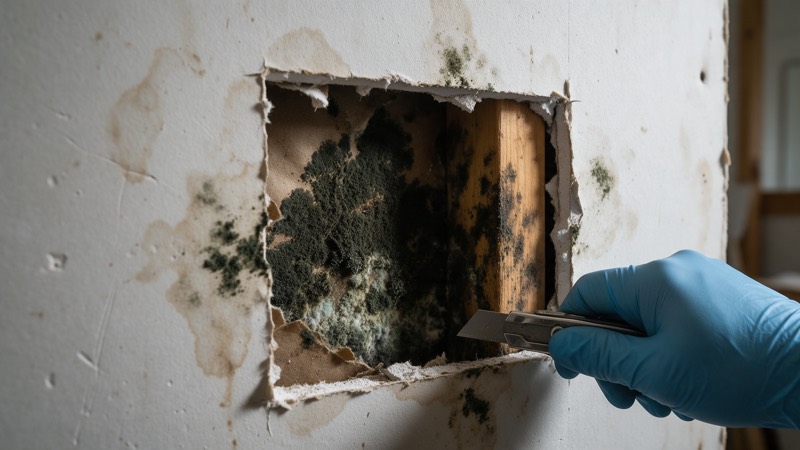
- You see dark, fuzzy, or spotted growth on the joists or subfloor, particularly over a patch bigger than about ten square feet.
- There is standing water, a flooded corner, or wet soil that does not dry.
- Insulation is sagging, black, or soaked.
- The musty smell upstairs gets worse when the HVAC runs, which suggests the ducts are involved.
- Anyone in the home is immunocompromised, pregnant, or has serious respiratory disease. Have somebody else go in.
Do not scrub or tear out a colonized crawl space yourself
Disturbing mold on wood in a confined space puts spores into the air you are breathing and pulls them upstairs through the stack effect. If you see growth, photograph it from a distance, close the access, and call 202-798-7663 or book a free inspection. We find the water source before anyone talks about removal.
The regional footnote
Everything above is sharper in this region. The clay soil across Northern Virginia holds water against foundations, and older housing in DC and inner Maryland often has a vented crawl space under a house that was never designed with humidity in mind. Summers here are long enough that the damage compounds.
If your hygrometer shows trouble, start with the vents and a dehumidifier. If it shows trouble and you also see growth, begin with a free inspection so the first step is a diagnosis rather than a guess.
Not sure which side of the line you are on?
The inspection is free and we will tell you honestly if it is a job you can do yourself.