Attic Mold Is Usually Your Bathroom Fan, and Here's How to Check
Most people who find black staining in the attic assume the roof is leaking, and sometimes it is. But in the houses we see across DC, Northern Virginia, and Maryland, the more common culprit is dull and much cheaper: a bathroom fan that blows warm, wet air into the attic instead of out of the house. You can check it yourself in about twenty minutes with a flashlight.
Why a bath fan can rot a roof deck
A shower puts a surprising amount of water into the air. A fan is supposed to carry that moisture through a duct and out of the building. If the duct stops short, or was never connected, the steam goes into the attic and meets the coldest surface in the house: the underside of the roof sheathing in winter.
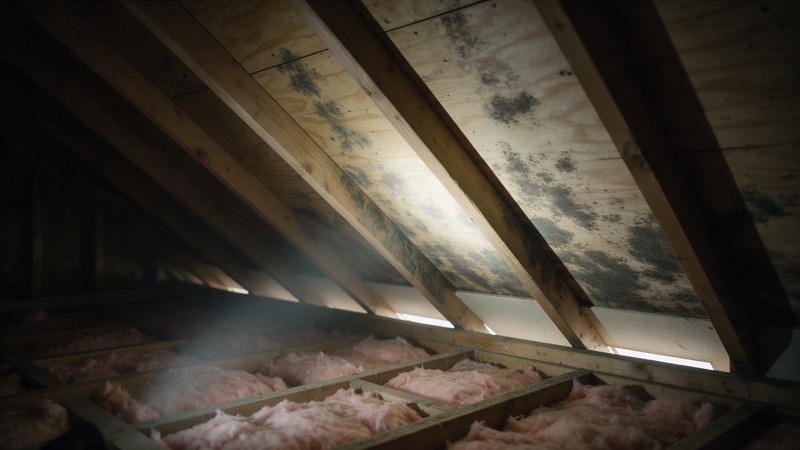
Water condenses there, soaks the wood, and stays. Add a dark attic with plenty of food for mold in the wood itself, and you get the pattern we find constantly: staining that is heaviest around the fan and thins out with distance, usually on the shaded side of the roof.
Leak or fan? Read the stain pattern
A roof leak leaves a trail that runs downhill from a penetration such as a plumbing vent, chimney, or valley. Fan moisture leaves a diffuse bloom centered on the duct end. Even growth across a whole slope points to a ventilation problem more broadly. Our attic mold page covers all three causes.
What to bring before you go up
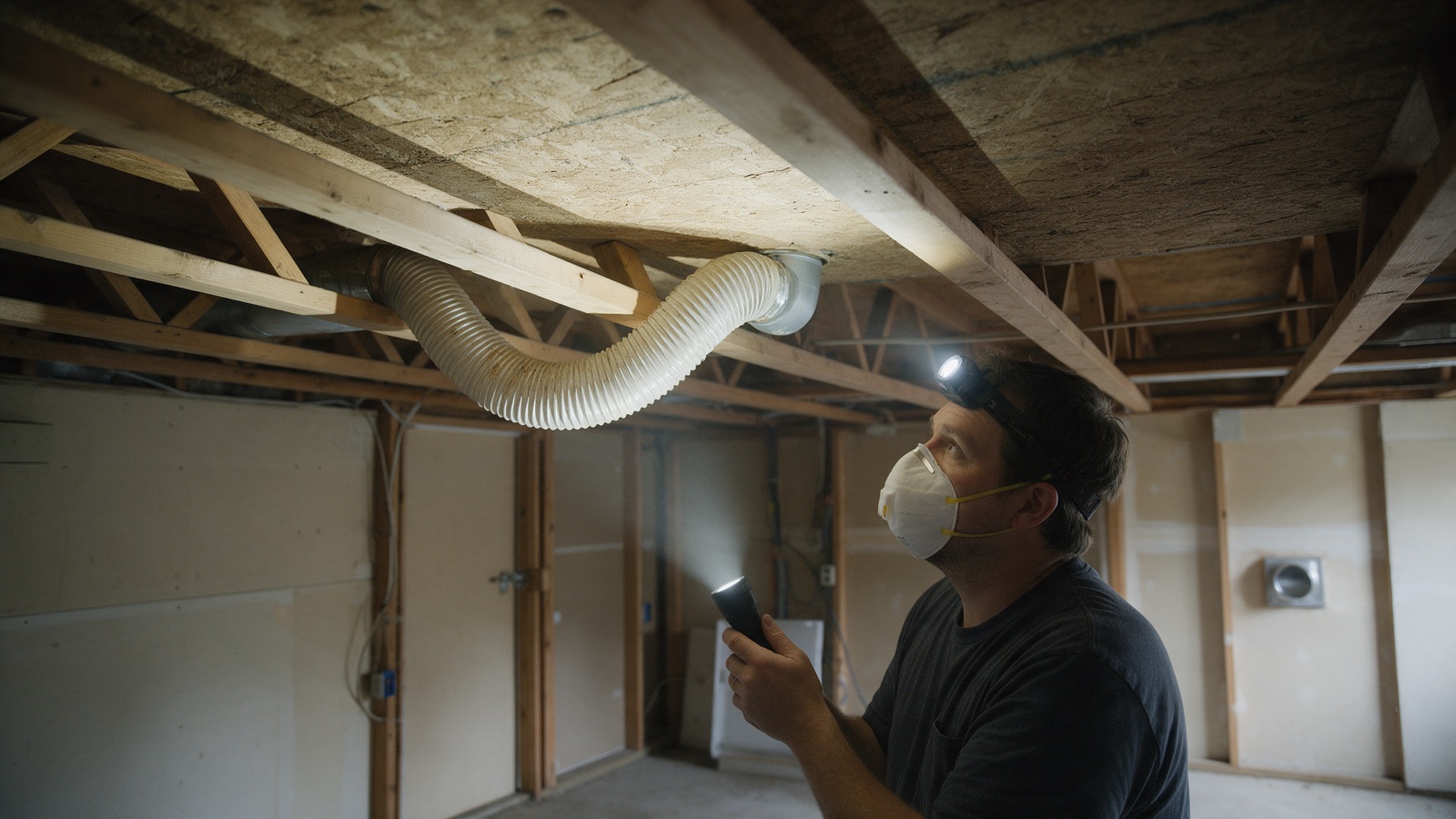
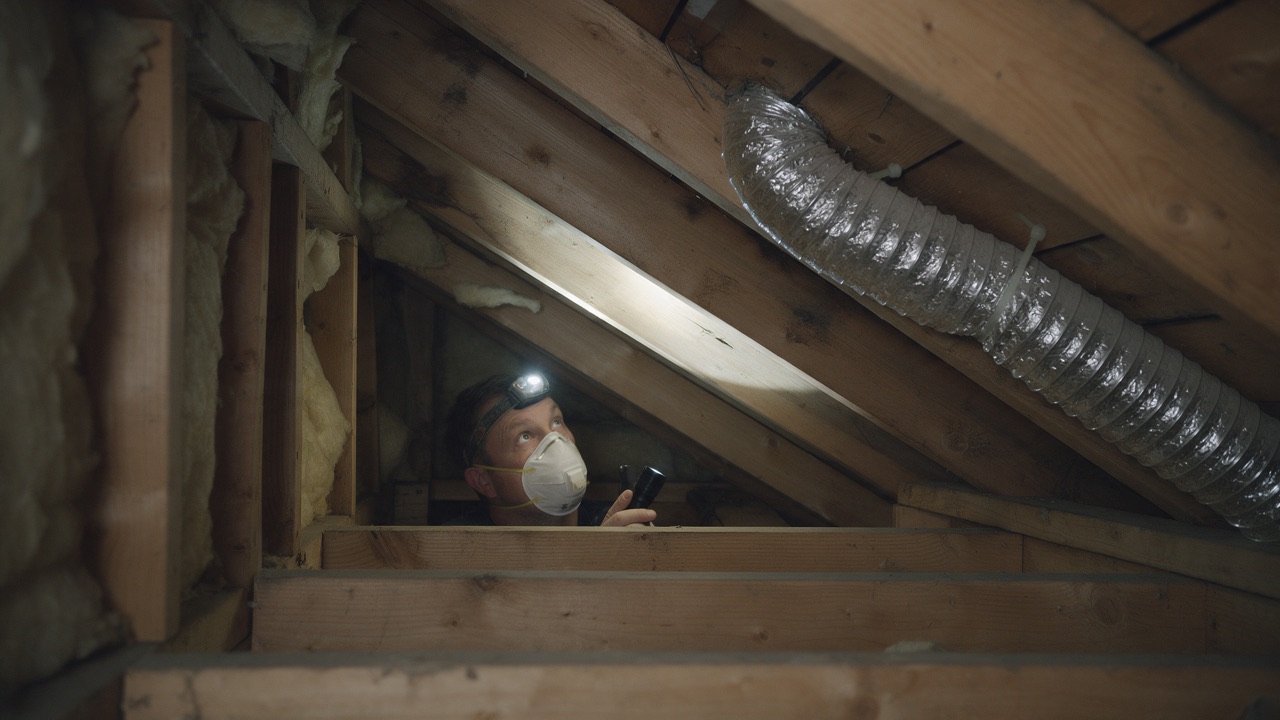
This is a look-and-photograph job, not a cleanup. Bring a bright flashlight or headlamp, an N95 respirator, gloves, a phone for photos, and a board or two to kneel on. Walk only on the joists. Stepping between them puts a foot through the ceiling below.
Go early in the morning or in cooler weather. Summer attics in this region get dangerously hot, and an attic check is not worth heat illness.
The twenty-minute check
- Find every bath fan from belowEach bathroom fan has a housing in the ceiling. Note which bathrooms have one, then locate the same spot from above once you are in the attic. Kitchen hoods and dryer vents can be wrongly terminated too, so look for those as well.
- Follow the duct to its endTrace the flexible or rigid duct from the fan housing. It should run to a roof cap or a gable or soffit wall cap and be clamped on. If it ends in the open attic, lies disconnected on the insulation, or is tucked into a soffit vent, you have found the problem.
- Look for sag and disconnectsFlexible duct that droops into a low spot collects condensation and can drain it back to the fan. Check that every joint is taped or clamped, not just pushed together.
- Check the sheathing near the duct endShine the light along the underside of the roof deck. Look for dark staining, rusty nail tips, and frost or damp insulation in cold weather. Photograph everything before you touch it.
- Test the fan from belowBack in the bathroom, hold a square of toilet paper against the grille with the fan on. If it holds, the fan is pulling. If it falls, the fan is weak, clogged with dust, or the duct is blocked.
- Check the outside endFrom the yard, look for the cap on the roof or wall. A cap with a flap that is stuck shut or full of debris will also push moisture back into the attic.
The cheap fix: connect it and send it outside
If your duct simply ends in the attic, reconnecting it to a proper cap is a manageable weekend job for someone comfortable on a ladder. The goal is a short, straight, insulated run to the outdoors with a damper cap at the end.
- Use rigid or semi-rigid duct where you can. Smooth walls move air better and do not sag like thin flex.
- Keep the run short and slope it toward the cap. Any water that condenses then drains outside rather than back to the fan.
- Insulate the duct. In an unconditioned attic, an uninsulated duct sweats. A sleeve of duct insulation prevents that.
- Terminate outside, never into the soffit. Soffit vents feed air back into the attic, so the moisture just circles around.
- Seal joints with foil tape and a clamp. Standard cloth duct tape dries out and lets go.
Cutting a new roof cap penetration is a different matter. That touches your roofing, and a badly flashed cap becomes a roof leak of its own. A wall or gable termination is easier and safer for a first-timer. If the only practical route is through the roof, that is a job for a roofer or a ventilation tradesperson.
Do not add insulation over wet or stained material
Burying damp sheathing or insulation hides the problem and makes the eventual cleanup larger. Fix the moisture source first, let everything dry, and only then top up insulation. If insulation is already wet or matted, it needs to come out.
What you can and cannot clean yourself
Light surface staining on sound, dry sheathing is something a careful homeowner can sometimes handle with detergent and water, after the fan is fixed and the wood has dried. Mist before wiping so you do not throw spores into the air, and wear the respirator the whole time. Our DIY mold playbook walks through the method.
The honest limit is size and texture. Rough, unfinished roof sheathing is porous and hard to clean well, and an attic is a poor place to work: you are hunched, hot, and breathing dust. If the staining covers more than a small patch, or the wood feels soft, treat it as a professional job.
What it costs
The check is free. The fix is cheap when the problem is only a loose duct. The professional figures below match the ranges on our attic service page, and the supply prices are ordinary retail.
| Item or situation | Who does it | Typical cost |
|---|---|---|
| Flashlight or headlamp | Bright LED headlamp | $15–$30 |
| N95 respirators and nitrile gloves | Basic protection for the attic visit | $15–$25 |
| Semi-rigid duct, clamps, and foil tape | Enough to reconnect one fan | $30–$60 |
| Duct insulation sleeve | Keeps the duct from sweating | $15–$30 |
| Wall or gable vent cap with damper | Replaces a missing or stuck cap | $12–$30 |
| Reconnecting and re-venting a bath fan through the roof | Not usually a DIY job | $350–$900 per fan |
| Localized treatment of stained sheathing | Not a DIY job once it is more than a small patch | $800–$2,000 |
| Full attic remediation | Not a DIY job | $2,000–$6,000 |
| Visual inspection with moisture mapping | The check above | Free, no obligation |
Typical range for this market — not a quote. Every property is different, and the number that matters is the written scope you get after the free inspection.
Notice the spread. A box of duct and a clamp is the price of lunch. Left alone for several winters, the same loose duct turns into a four-figure treatment, and sometimes an insulation replacement on top of it.
Common mistakes with attic moisture
- Blaming the roof first. Paying for roof work when the fan is the cause means the staining returns the next winter.
- Venting into the soffit. It looks like the outdoors, but the air re-enters the attic through the vents.
- Using thin flex duct with a long sag. Water pools in the low spot and drains back toward the fan.
- Running the fan only during the shower. The moisture lingers afterward. Leave it on twenty minutes after, ideally on a timer switch.
- Stuffing insulation against the eaves. Blocking the soffit intake kills the airflow that keeps the attic dry.
- Skipping the photos. If this ever becomes an insurance or real estate matter, pictures taken before anyone touched anything carry weight.
Real estate and insurance angles
Attic staining is a classic item on a home inspection. Buyers often ask for remediation and documentation before closing, so fixing the cause and keeping your photos and receipts is worth the effort if you plan to sell. Our inspection page explains what a lender or buyer will usually accept.
On insurance, mold that follows a sudden covered event is treated differently from mold that comes from long-term moisture. A bath fan that has vented into the attic for years is generally the second kind. Read your policy and ask your carrier, since we cannot tell you how a specific claim would be handled.
Where you stop
Do the look-and-photograph check, and fix a simple loose duct if you are comfortable doing so. Call a professional when any of these is true:
- The staining covers more than a small patch, or about ten square feet or more.
- The roof sheathing feels soft, spongy, or crumbles when pressed.
- Insulation is wet, matted, or discolored.
- You see staining running downhill from a roof penetration, which suggests a real leak.
- The only route for the duct is through the roof.
- Someone in the house is immunocompromised, pregnant, asthmatic, or an infant.
- You need documentation for a sale, a lender, or an insurer.
Stop if the attic is hot, the decking is weak, or the stain is large
Do not stay in an attic that is uncomfortably hot, and do not step off the joists. If the wood is soft or the growth is extensive, back out, photograph what you can safely see from the hatch, and call 202-798-7663. A free visual inspection is cheaper than a fall or a bigger spread.
The short version
Check where your bath fan ends before you pay anyone to look at your roof. If it ends in the attic, connect it to a proper cap outdoors, insulate the duct, and let the wood dry before you decide whether any cleaning is needed. If you find more than a small stain or anything soft, bring in help. For a free visual inspection across DC, Northern Virginia, or Maryland, call 202-798-7663 or book through Calendly on this site.
Not sure which side of the line you are on?
The inspection is free and we will tell you honestly if it is a job you can do yourself.